


Guest Post by Commercial Photographer, Mathieu Young
There is a lot of mythology surrounding the life of a freelancer. Some of it is real, and some of it we need to toss into the trash can. It’s hard enough to be a creative – let’s not make it harder by buying into these five common stories.
You’re not a “left brain” or a “right brain”
You’re a brain.
It’s become accepted that “right brain” people are creative, free thinkers (us), while “left brain” people are analytical and quantitative (them).
The history traces back to Roger W. Sperry’s “Split Brain Experiments” in the early 1960’s, where he studied humans with their brains severed, and then—Surprise!—there were some specific functions they couldn’t perform.
But more modern (and less brutal) research has shown us that for “individual personality traits, such as creativity or a tendency toward the rational rather than the intuitive, there has been little or no evidence supporting a residence in one area of the brain.” (Harvard Health Publishing, 2017).
When you plug someone’s (non-severed) brain into the mainframe and ask them to paint a picture or do some algebra, neurons light up all over – left, right, and everywhere in-between.
But we creatives seem to love this “left brain vs. right brain” nonsense because it lets us off the hook for doing the hard things we don’t love to do. It makes it so easy to tell ourselves “I can’t plan a project, make a timeline, hold to a budget, pay my taxes, answer my emails, or send my invoices in on time… I’m a CREATIVE. That’s all stuff that only ‘left brain’ people excel at.”
I’m calling bullshit.
“You may be more creative than analytical, but like all things, structure and planning can be learned by exercise, just like your creativity needs to be exercised.”
Don’t let anyone (especially yourself) say “you’re too creative, you can’t get organized”. You need to do both.
Wolves are pack animals
There’s always been something romantic about the myth of the Lone Wolf, at least to me. Independent. Determined. Prowling the tundra, fearless.
But a quick Google search reveals that lone wolfs are actually the ones that get pushed out of their tribes.. They’re out there eating dead rats to survive. It’s sad, not something to strive for.
Being freelance means we’re operating at a disadvantage when it comes to building a community. We don’t have one baked in from our office water cooler or co-worker Slack chats. It means we need to put energy and effort into building, fostering and maintaining our professional communities.
Reid Hoffman, co-founder and Chairman of LinkedIn, says it well. He believes that if you do all the right things “but do so alone – you’ll fall short. World-class professionals build networks to help them navigate the world. No matter how brilliant your mind or strategy, if you’re playing a solo game, you’ll always lose out to a team.” (“The Start-up of You”, 2012)
It took me years to start recognizing the real importance of a community, and the damage that I was doing to myself when I bought into the romanticization of the Lone Wolf, and to begin to put the time and energy into building a network and a community.
It’s easier in the short term to not bother, but don’t get enamored by the myth of the Lone Wolf. Eating dead rats to survive is lame.
You need to put on your fucking pants
I’ve said it before, and I’ll say it again. If it’s 10am and you’re still in your slippers, you’re doing it wrong. Take a shower, and put on your pants. It’s time for all of us to treat freelancing like the real job that it is.
Just because you can work from home in your pajamas does not mean you should work from home in your pajamas.
“If you want to build a successful, sustainable, long term independent career, you need to shake off the vision of working from your bed on your laptop. ”
Working from home may be a necessity at first (though, with the prevalence of co-working space it doesn’t have to be), but that doesn’t mean you shouldn’t act like a professional. Carve out space in your home that is just for work. Don’t multitask with chores, or lean in to other distractions. Dress to impress (even if it’s just the mailman).
When I used to work from home, I had a trick I loved, which was to set a specific time I needed to be at my desk, and 10 minutes before that I would leave the house, walk around the block, and then “arrive at work”. It let me clear my mind, and put me in a headspace where I was ready to do real work.
You should “dance like no one’s watching” but “work like everyone’s watching”.
Busy is not a badge of honor
I’m so guilty of this. For the past 15 years, when someone asked me how I was doing, my default answer has been “great; busy”.
Surface-level, it’s true. And it seemed to be an easy, quick indicator that my career was on track, that my work was in demand and my hustle was paying off. It’s also a cop-out.
We’re all busy. Saying it doesn’t really mean anything.
Some smart people have suggested that we replace the phrase “I’m too busy” with “that’s not a priority for me right now”, and then see how it feels to admit that out loud.
It’s a challenging idea, and it’s even harder for us freelancers. We have to wear a dozen hats in order to run our business. We have to be some combination of manager, salesperson, marketer, coder, accountant, admin, coach, therapist, and creative all at once, all the time. So, no shit we’re “busy”.
Building a team as an independent creative is hard. It’s scary. It’s outside our comfort zone, and it stretches us financially. But it is the best thing you can ever do.
Start before you think you’re ready. Hire a bookkeeper and a CPA now. Take the hours days you would have spent filing your taxes and invest in meaningful, impactful areas of your business like creating new portfolio work, reaching out to targeted clients, or building systems for your marketing. In the long run, it will save you money, energy, and heartache.
When you’ve done that, come back and let’s talk about hiring an admin assistant, a marketing consultant, a sales agent, a business coach, and bringing on contractors that can handle your coding, copywriting, design, and whatever else isn’t your core creative skill set.
“What we really want to be isn’t busy, it’s productive. It’s actively engaged in meaningful work. It’s fulfilled and excited. It’s full of purpose and joy. ”
So don’t wear “busy” as a badge of honor. Doing all the work yourself can be a necessity at first, but the goal is to graduate and move past that. You need to be willing to collaborate, build, and lead a team. You need to learn to prioritize.
As Socrates said: Beware the barrenness of a busy life
Freelancers are the descendants of medieval mercenaries
This last one is a personal pet peeve. I have been, and will continue to be, bullish on the word “freelancer”, and scoff when people call me an “artrepreneur” or “free agent” or “soloist”, and this is one of the reasons why.
For too long, saying you’re freelance has played into a stereotype that you are a disorganized ball of stress, hanging out in your pajamas, with no friends, working on your laptop in your parents basement (and I think the reasons why are pretty clear if you’ve read the previous four myths).
Freelance got twisted and defined as “someone who you can get to work for free”.
But, the etymology of the word Freelancers dates back to 1820 and Sir Walter Scott’s book Ivanhoe, where the term Free Lances was first used to describe an army of medieval mercenaries.
He wrote, “I offered Richard the service of my Free Lances, and he refused them—I will lead them to Hull, seize on shipping, and embark for Flanders; thanks to the bustling times, a man of action will always find employment.”
The emphasis at the end is my own, and I think it perfectly sums up why freelancers will have an advantage in the future economy, even if it’s full of robots automating everyone’s jobs.
“We are people of action. We’re creatives who can learn the analytical. We’re solo workers who can learn to avoid the silo. We’re busy, but we know how to make time for the work that matters. ”
So, freelancers, let’s dispel the myths holding us back, and let’s take back the term and own it.
—-
Mathieu Young is a photographer and director and the founder of Art of Freelance, an online course and community for creatives.
Struggling to get your creative project off the ground?
Art of Freelance is currently enrolling for the March 26th course! Use the FRIENDOFNICK code for 10% off!
Announcing Art of Freelance 2019!
Don’t miss this opportunity to create something big.
Art of Freelance is offering full scholarships for LGBTQ & Non-Binary Creatives for its Spring 2019 course.
Art of Freelance is a 10-week online course designed to help us independent creatives accelerate our careers by providing the structure, accountability, community, feedback and guidance that helps us complete our most important projects – the personal and portfolio work that no one pays us to do.
The Spring dates are:
3/6 – 3/20 Enrollment Open
3/26 – 6/7 Spring 2019 Course
The course includes online exercises, and a once-a-week online check-in with a small cohort of other creatives. It culminates in multiple opportunities to share the work you create during the course.


LET'S CONSPIRE & CREATE
CULTIVATING YOUR VISUAL UNIQUENESS AND STREAMLINING YOUR BRAND'S EVOLUTION

Guest Post by Commercial Photographer, Mathieu Young
There is a lot of mythology surrounding the life of a freelancer. Some of it is real, and some of it we need to toss into the trash can. It’s hard enough to be a creative – let’s not make it harder by buying into these five common stories.
You’re not a “left brain” or a “right brain”
You’re a brain.
It’s become accepted that “right brain” people are creative, free thinkers (us), while “left brain” people are analytical and quantitative (them).
The history traces back to Roger W. Sperry’s “Split Brain Experiments” in the early 1960’s, where he studied humans with their brains severed, and then—Surprise!—there were some specific functions they couldn’t perform.
But more modern (and less brutal) research has shown us that for “individual personality traits, such as creativity or a tendency toward the rational rather than the intuitive, there has been little or no evidence supporting a residence in one area of the brain.” (Harvard Health Publishing, 2017).
When you plug someone’s (non-severed) brain into the mainframe and ask them to paint a picture or do some algebra, neurons light up all over – left, right, and everywhere in-between.
But we creatives seem to love this “left brain vs. right brain” nonsense because it lets us off the hook for doing the hard things we don’t love to do. It makes it so easy to tell ourselves “I can’t plan a project, make a timeline, hold to a budget, pay my taxes, answer my emails, or send my invoices in on time… I’m a CREATIVE. That’s all stuff that only ‘left brain’ people excel at.”
I’m calling bullshit.
“You may be more creative than analytical, but like all things, structure and planning can be learned by exercise, just like your creativity needs to be exercised.”
Don’t let anyone (especially yourself) say “you’re too creative, you can’t get organized”. You need to do both.
Wolves are pack animals
There’s always been something romantic about the myth of the Lone Wolf, at least to me. Independent. Determined. Prowling the tundra, fearless.
But a quick Google search reveals that lone wolfs are actually the ones that get pushed out of their tribes.. They’re out there eating dead rats to survive. It’s sad, not something to strive for.
Being freelance means we’re operating at a disadvantage when it comes to building a community. We don’t have one baked in from our office water cooler or co-worker Slack chats. It means we need to put energy and effort into building, fostering and maintaining our professional communities.
Reid Hoffman, co-founder and Chairman of LinkedIn, says it well. He believes that if you do all the right things “but do so alone – you’ll fall short. World-class professionals build networks to help them navigate the world. No matter how brilliant your mind or strategy, if you’re playing a solo game, you’ll always lose out to a team.” (“The Start-up of You”, 2012)
It took me years to start recognizing the real importance of a community, and the damage that I was doing to myself when I bought into the romanticization of the Lone Wolf, and to begin to put the time and energy into building a network and a community.
It’s easier in the short term to not bother, but don’t get enamored by the myth of the Lone Wolf. Eating dead rats to survive is lame.
You need to put on your fucking pants
I’ve said it before, and I’ll say it again. If it’s 10am and you’re still in your slippers, you’re doing it wrong. Take a shower, and put on your pants. It’s time for all of us to treat freelancing like the real job that it is.
Just because you can work from home in your pajamas does not mean you should work from home in your pajamas.
“If you want to build a successful, sustainable, long term independent career, you need to shake off the vision of working from your bed on your laptop. ”
Working from home may be a necessity at first (though, with the prevalence of co-working space it doesn’t have to be), but that doesn’t mean you shouldn’t act like a professional. Carve out space in your home that is just for work. Don’t multitask with chores, or lean in to other distractions. Dress to impress (even if it’s just the mailman).
When I used to work from home, I had a trick I loved, which was to set a specific time I needed to be at my desk, and 10 minutes before that I would leave the house, walk around the block, and then “arrive at work”. It let me clear my mind, and put me in a headspace where I was ready to do real work.
You should “dance like no one’s watching” but “work like everyone’s watching”.
Busy is not a badge of honor
I’m so guilty of this. For the past 15 years, when someone asked me how I was doing, my default answer has been “great; busy”.
Surface-level, it’s true. And it seemed to be an easy, quick indicator that my career was on track, that my work was in demand and my hustle was paying off. It’s also a cop-out.
We’re all busy. Saying it doesn’t really mean anything.
Some smart people have suggested that we replace the phrase “I’m too busy” with “that’s not a priority for me right now”, and then see how it feels to admit that out loud.
It’s a challenging idea, and it’s even harder for us freelancers. We have to wear a dozen hats in order to run our business. We have to be some combination of manager, salesperson, marketer, coder, accountant, admin, coach, therapist, and creative all at once, all the time. So, no shit we’re “busy”.
Building a team as an independent creative is hard. It’s scary. It’s outside our comfort zone, and it stretches us financially. But it is the best thing you can ever do.
Start before you think you’re ready. Hire a bookkeeper and a CPA now. Take the hours days you would have spent filing your taxes and invest in meaningful, impactful areas of your business like creating new portfolio work, reaching out to targeted clients, or building systems for your marketing. In the long run, it will save you money, energy, and heartache.
When you’ve done that, come back and let’s talk about hiring an admin assistant, a marketing consultant, a sales agent, a business coach, and bringing on contractors that can handle your coding, copywriting, design, and whatever else isn’t your core creative skill set.
“What we really want to be isn’t busy, it’s productive. It’s actively engaged in meaningful work. It’s fulfilled and excited. It’s full of purpose and joy. ”
So don’t wear “busy” as a badge of honor. Doing all the work yourself can be a necessity at first, but the goal is to graduate and move past that. You need to be willing to collaborate, build, and lead a team. You need to learn to prioritize.
As Socrates said: Beware the barrenness of a busy life
Freelancers are the descendants of medieval mercenaries
This last one is a personal pet peeve. I have been, and will continue to be, bullish on the word “freelancer”, and scoff when people call me an “artrepreneur” or “free agent” or “soloist”, and this is one of the reasons why.
For too long, saying you’re freelance has played into a stereotype that you are a disorganized ball of stress, hanging out in your pajamas, with no friends, working on your laptop in your parents basement (and I think the reasons why are pretty clear if you’ve read the previous four myths).
Freelance got twisted and defined as “someone who you can get to work for free”.
But, the etymology of the word Freelancers dates back to 1820 and Sir Walter Scott’s book Ivanhoe, where the term Free Lances was first used to describe an army of medieval mercenaries.
He wrote, “I offered Richard the service of my Free Lances, and he refused them—I will lead them to Hull, seize on shipping, and embark for Flanders; thanks to the bustling times, a man of action will always find employment.”
The emphasis at the end is my own, and I think it perfectly sums up why freelancers will have an advantage in the future economy, even if it’s full of robots automating everyone’s jobs.
“We are people of action. We’re creatives who can learn the analytical. We’re solo workers who can learn to avoid the silo. We’re busy, but we know how to make time for the work that matters. ”
So, freelancers, let’s dispel the myths holding us back, and let’s take back the term and own it.
—-
Mathieu Young is a photographer and director and the founder of Art of Freelance, an online course and community for creatives.
Struggling to get your creative project off the ground?
Art of Freelance is currently enrolling for the March 26th course! Use the FRIENDOFNICK code for 10% off!
Announcing Art of Freelance 2019!
Don’t miss this opportunity to create something big.
Art of Freelance is offering full scholarships for LGBTQ & Non-Binary Creatives for its Spring 2019 course.
Art of Freelance is a 10-week online course designed to help us independent creatives accelerate our careers by providing the structure, accountability, community, feedback and guidance that helps us complete our most important projects – the personal and portfolio work that no one pays us to do.
The Spring dates are:
3/6 – 3/20 Enrollment Open
3/26 – 6/7 Spring 2019 Course
The course includes online exercises, and a once-a-week online check-in with a small cohort of other creatives. It culminates in multiple opportunities to share the work you create during the course.

3/16/19
Five Myths to Dispel for Creatives
infuse your vision with a fresh breath of creativity and vitality
BOOK A BRAND PHOTOSHOOT


GET THE DETAILS
GET THE DETAILS
infuse your vision with a fresh breath of creativity and vitality

PODCAST
BRAND INTELLIGENCE
CREATIVE INTELLIGENCE
LIFE INTELLIGENCE


masterfully aligning perception and reality through personal branding



masterfully aligning perception and reality through personal branding

Guest Post by Commercial Photographer, Mathieu Young
There is a lot of mythology surrounding the life of a freelancer. Some of it is real, and some of it we need to toss into the trash can. It’s hard enough to be a creative – let’s not make it harder by buying into these five common stories.
You’re not a “left brain” or a “right brain”
You’re a brain.
It’s become accepted that “right brain” people are creative, free thinkers (us), while “left brain” people are analytical and quantitative (them).
The history traces back to Roger W. Sperry’s “Split Brain Experiments” in the early 1960’s, where he studied humans with their brains severed, and then—Surprise!—there were some specific functions they couldn’t perform.
But more modern (and less brutal) research has shown us that for “individual personality traits, such as creativity or a tendency toward the rational rather than the intuitive, there has been little or no evidence supporting a residence in one area of the brain.” (Harvard Health Publishing, 2017).
When you plug someone’s (non-severed) brain into the mainframe and ask them to paint a picture or do some algebra, neurons light up all over – left, right, and everywhere in-between.
But we creatives seem to love this “left brain vs. right brain” nonsense because it lets us off the hook for doing the hard things we don’t love to do. It makes it so easy to tell ourselves “I can’t plan a project, make a timeline, hold to a budget, pay my taxes, answer my emails, or send my invoices in on time… I’m a CREATIVE. That’s all stuff that only ‘left brain’ people excel at.”
I’m calling bullshit.
“You may be more creative than analytical, but like all things, structure and planning can be learned by exercise, just like your creativity needs to be exercised.”
Don’t let anyone (especially yourself) say “you’re too creative, you can’t get organized”. You need to do both.
Wolves are pack animals
There’s always been something romantic about the myth of the Lone Wolf, at least to me. Independent. Determined. Prowling the tundra, fearless.
But a quick Google search reveals that lone wolfs are actually the ones that get pushed out of their tribes.. They’re out there eating dead rats to survive. It’s sad, not something to strive for.
Being freelance means we’re operating at a disadvantage when it comes to building a community. We don’t have one baked in from our office water cooler or co-worker Slack chats. It means we need to put energy and effort into building, fostering and maintaining our professional communities.
Reid Hoffman, co-founder and Chairman of LinkedIn, says it well. He believes that if you do all the right things “but do so alone – you’ll fall short. World-class professionals build networks to help them navigate the world. No matter how brilliant your mind or strategy, if you’re playing a solo game, you’ll always lose out to a team.” (“The Start-up of You”, 2012)
It took me years to start recognizing the real importance of a community, and the damage that I was doing to myself when I bought into the romanticization of the Lone Wolf, and to begin to put the time and energy into building a network and a community.
It’s easier in the short term to not bother, but don’t get enamored by the myth of the Lone Wolf. Eating dead rats to survive is lame.
You need to put on your fucking pants
I’ve said it before, and I’ll say it again. If it’s 10am and you’re still in your slippers, you’re doing it wrong. Take a shower, and put on your pants. It’s time for all of us to treat freelancing like the real job that it is.
Just because you can work from home in your pajamas does not mean you should work from home in your pajamas.
“If you want to build a successful, sustainable, long term independent career, you need to shake off the vision of working from your bed on your laptop. ”
Working from home may be a necessity at first (though, with the prevalence of co-working space it doesn’t have to be), but that doesn’t mean you shouldn’t act like a professional. Carve out space in your home that is just for work. Don’t multitask with chores, or lean in to other distractions. Dress to impress (even if it’s just the mailman).
When I used to work from home, I had a trick I loved, which was to set a specific time I needed to be at my desk, and 10 minutes before that I would leave the house, walk around the block, and then “arrive at work”. It let me clear my mind, and put me in a headspace where I was ready to do real work.
You should “dance like no one’s watching” but “work like everyone’s watching”.
Busy is not a badge of honor
I’m so guilty of this. For the past 15 years, when someone asked me how I was doing, my default answer has been “great; busy”.
Surface-level, it’s true. And it seemed to be an easy, quick indicator that my career was on track, that my work was in demand and my hustle was paying off. It’s also a cop-out.
We’re all busy. Saying it doesn’t really mean anything.
Some smart people have suggested that we replace the phrase “I’m too busy” with “that’s not a priority for me right now”, and then see how it feels to admit that out loud.
It’s a challenging idea, and it’s even harder for us freelancers. We have to wear a dozen hats in order to run our business. We have to be some combination of manager, salesperson, marketer, coder, accountant, admin, coach, therapist, and creative all at once, all the time. So, no shit we’re “busy”.
Building a team as an independent creative is hard. It’s scary. It’s outside our comfort zone, and it stretches us financially. But it is the best thing you can ever do.
Start before you think you’re ready. Hire a bookkeeper and a CPA now. Take the hours days you would have spent filing your taxes and invest in meaningful, impactful areas of your business like creating new portfolio work, reaching out to targeted clients, or building systems for your marketing. In the long run, it will save you money, energy, and heartache.
When you’ve done that, come back and let’s talk about hiring an admin assistant, a marketing consultant, a sales agent, a business coach, and bringing on contractors that can handle your coding, copywriting, design, and whatever else isn’t your core creative skill set.
“What we really want to be isn’t busy, it’s productive. It’s actively engaged in meaningful work. It’s fulfilled and excited. It’s full of purpose and joy. ”
So don’t wear “busy” as a badge of honor. Doing all the work yourself can be a necessity at first, but the goal is to graduate and move past that. You need to be willing to collaborate, build, and lead a team. You need to learn to prioritize.
As Socrates said: Beware the barrenness of a busy life
Freelancers are the descendants of medieval mercenaries
This last one is a personal pet peeve. I have been, and will continue to be, bullish on the word “freelancer”, and scoff when people call me an “artrepreneur” or “free agent” or “soloist”, and this is one of the reasons why.
For too long, saying you’re freelance has played into a stereotype that you are a disorganized ball of stress, hanging out in your pajamas, with no friends, working on your laptop in your parents basement (and I think the reasons why are pretty clear if you’ve read the previous four myths).
Freelance got twisted and defined as “someone who you can get to work for free”.
But, the etymology of the word Freelancers dates back to 1820 and Sir Walter Scott’s book Ivanhoe, where the term Free Lances was first used to describe an army of medieval mercenaries.
He wrote, “I offered Richard the service of my Free Lances, and he refused them—I will lead them to Hull, seize on shipping, and embark for Flanders; thanks to the bustling times, a man of action will always find employment.”
The emphasis at the end is my own, and I think it perfectly sums up why freelancers will have an advantage in the future economy, even if it’s full of robots automating everyone’s jobs.
“We are people of action. We’re creatives who can learn the analytical. We’re solo workers who can learn to avoid the silo. We’re busy, but we know how to make time for the work that matters. ”
So, freelancers, let’s dispel the myths holding us back, and let’s take back the term and own it.
—-
Mathieu Young is a photographer and director and the founder of Art of Freelance, an online course and community for creatives.
Struggling to get your creative project off the ground?
Art of Freelance is currently enrolling for the March 26th course! Use the FRIENDOFNICK code for 10% off!
Announcing Art of Freelance 2019!
Don’t miss this opportunity to create something big.
Art of Freelance is offering full scholarships for LGBTQ & Non-Binary Creatives for its Spring 2019 course.
Art of Freelance is a 10-week online course designed to help us independent creatives accelerate our careers by providing the structure, accountability, community, feedback and guidance that helps us complete our most important projects – the personal and portfolio work that no one pays us to do.
The Spring dates are:
3/6 – 3/20 Enrollment Open
3/26 – 6/7 Spring 2019 Course
The course includes online exercises, and a once-a-week online check-in with a small cohort of other creatives. It culminates in multiple opportunities to share the work you create during the course.
3/16/19
Five Myths to Dispel for Creatives
When you need a trusted creative partner in the room.
Take the Fit Check
Be seen at the level you’re stepping into.

Hey! I'm Nick.
PHOTOGRAPHER
BRAND ALCHEMIST
TEACHER
At vero eos et accusamus et iusto odio dignissimos ducimus qui blanditiis praesentium voluptatum deleniti atque corrupti quos dolores et quas molestias excepturi sint occaecati cupiditate non provident, similique sunt in culpa qui officia deserunt mollitia.
Build authority from the inside out.
Emanate is a creative-direction-led photography experience for entrepreneurs, speakers, and thought leaders in a moment of expansion. This isn’t about better photos. It’s about aligning how you’re seen with who you’ve become. For seasons of rebrand, visibility, and next-level leadership.

Magnetic Authority is a self-guided container for people who feel visible, but not fully anchored.
If your message keeps shifting, your brand feels inconsistent, or your presence doesn’t match your capability yet. This is where you build the foundation before you scale.
Take the Fit Check
Start Here
For founders, creatives, and leaders who want a trusted long-term partner. This isn’t coaching or traditional consulting.
It’s an ongoing creative partnership focused on bringing your personal brand identity to life.
Your brand. Your website. Your visuals.
All shaped as a direct extension of who you are. The work also includes a bespoke process of identifying and aligning the right experts when needed, so nothing gets built out of sync with your core.
Explore the Partnership

Quiet. Precise. Highly Selective.
NEXT post
PREVIOUS post
read the latest
Brand guidelines are static rules for the surface. A Brand Brain is a living codification of identity a team or an AI can generate from. The difference, defined.
We trained six styles of kung fu in one month. Sampling that widely taught me how a creative actually finds the practice worth years: breadth first, the pull as data, then depth.
Travel makes you more creative because unfamiliar places wake up your perception. Why the effect works, and how to bring the sharpened eye home with you.
Your brand photos lag behind you because you kept evolving and the images stayed frozen. Why the gap opens, how to spot it, and what closes it.
The kung fu school had rules: locked-in weekdays, dawn starts, push-ups for lateness. A month inside taught me that constraints you choose are what make depth possible.
A daily creative practice is making one real thing every day, however small, to stay in a proactive state. A working definition, and how to build one that lasts.

AI describes your brand by averaging your public record. How to codify one identity, repeat it everywhere, and get the machines to echo you back accurately.

I’ve photographed Justin Bieber several times and seen fame up close. His stripped-down Coachella set showed the thing I keep relearning about creative work: production amplifies, and only artistry carries.

You recover from creative burnout by treating it as a nervous system state: build real down-cycles, read your own signals, and return to the work you love.
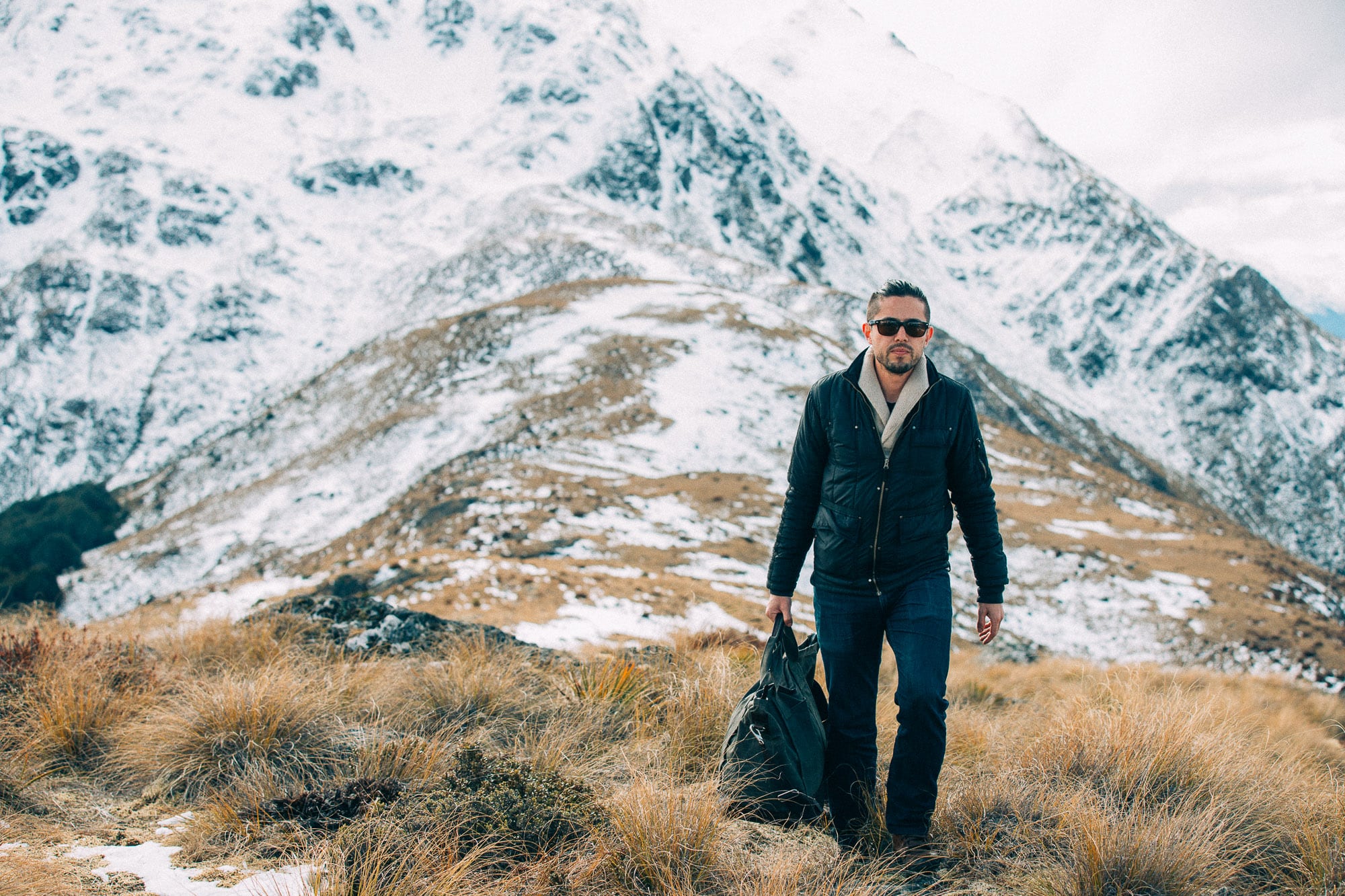
A magnetic personal brand comes from coherence and one clear through-line. Here is how entrepreneurs build one, in order, and the trap that keeps most brands scattered.

I spent a month training kung fu in Wudang at 47, the oldest and slowest learner in the room. What being a beginner again in midlife taught me about pace, comparison, and starting anyway.
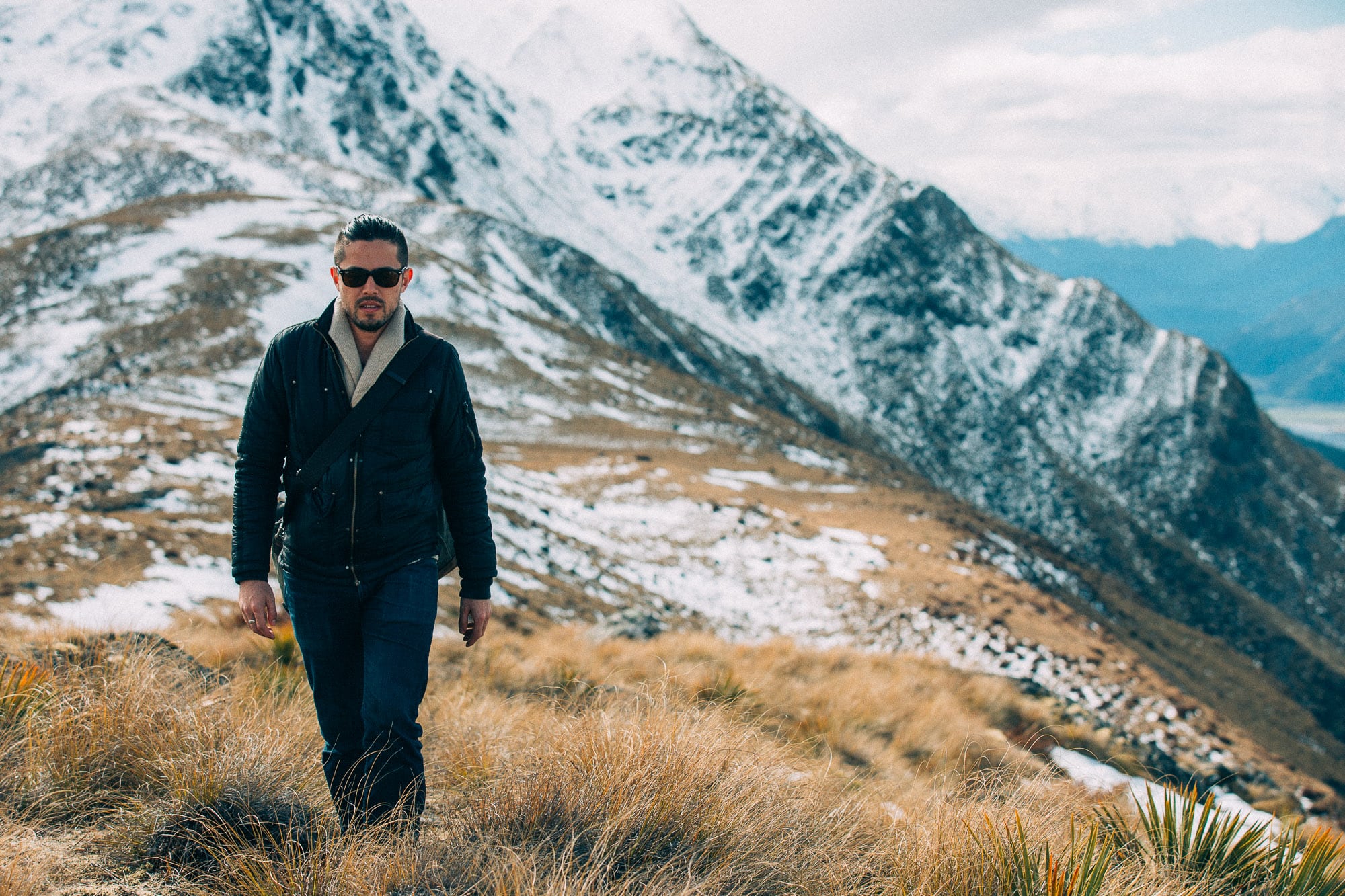
You develop taste through thousands of reps of looking closely and deciding what works. A photographer’s honest answer on how taste gets built.

You make a personal brand more coherent by naming the identity underneath it, distilling a one or two word through-line, and bringing the four layers into agreement. The full path, in order.

About the Blogger
I was born in a low middle class conservative religious family in the suburbs of Seattle. Art was and always has been my passion, and more than that a way of life. Starting as a graphic designer, I taught myself photography, built a commercial/editorial business shooting for the worlds biggest brands like Nike, Coca-Cola, Adidas and more. I've also had the opportunity to photograph the world's biggest celebrities like Justin Bieber, Usher, Jessica Alba and more. I've curated a lifestyle around creativity and have learned a lot along the way which I get to share here.
I was born in a low middle class conservative religious family in the suburbs of Seattle. Art was and always has been my passion, and more than that a way of life. Starting as a graphic designer, I taught myself photography, built a commercial/editorial business shooting for the worlds biggest brands like Nike, Coca-Cola, Adidas and more. I've also had the opportunity to photograph the world's biggest celebrities like Justin Bieber, Usher, Jessica Alba and more. I've curated a lifestyle around creativity and have learned a lot along the way which I get to share here.
