


Today’s post is an interview with Rukmini Poddar, a visual designer and illustrator. She’s based in New York City and also works as a designer for The Bhakti Center. I met Rukmini through Jay Shetty, a mutual friend of ours and was particularly inspired with her Enneagram illustrations. For those of you who don’t know, the Enneagram is a personality typing system that consists of nine different types. Everyone is considered to be one single type, although one can have traits belonging to other ones. Check out the interview below.
Where are you based?
New York City
What is your creative zone of genius?
I would hope to think that it lies in the intersection of creative illustration and healthy self awareness.
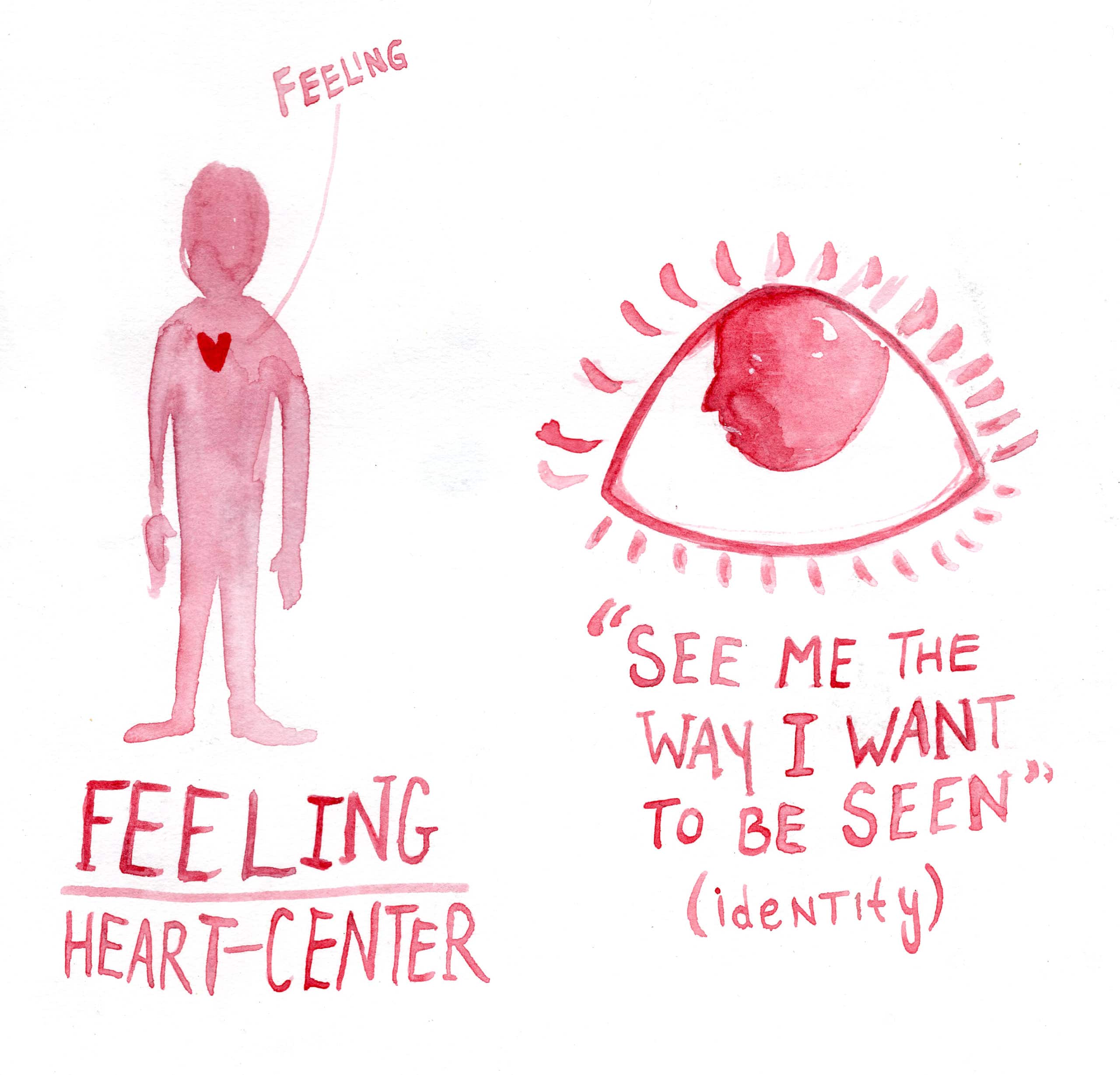
What is the story of this particular project?
The seed for this project, 100 days of Illustrating the Enneagram, was planted in my heart a few years ago. It started in 2016 when I decided to dedicate 100 days of my life to illustrating the murky, unclear and often obscure emotions I feel in my life. That is when I started to become endlessly fascinated with understanding human emotion and different personality frameworks.
Not too long after, a friend told me that I was drawing Enneagram types without even knowing it. I didn’t know what that meant.
I soon found out that the Enneagram is an incredibly nuanced and specific personality typing system. It’s a powerful tool for understanding the human psyche and ultimately for self growth and transformation.
Unlike most personality typing systems, it focuses on motivation rather than behavior.
Last year I dived into head first into the world of Enneagram when I took 2 intensive Enneagram workshops entitled Excavating Your Ego, hosted by Upbuild. As I was taking these workshops I immediately dreamt of the day that I could help share this knowledge through illustration. I found that visual guides could make the enneagram so much more accessible and understandable to people.
It’s a tool that I found to be so helpful in understanding myself better and for creating stronger sense of empathy in understanding the sufferings and joys of others.
What was your inspiration for creating this?
I find illustration such a powerful way to share knowledge with others. The Enneagram has proven to be so helpful in understanding myself and others better, that I wanted to find a visual language where I could make it more accessible and easily understood to people.
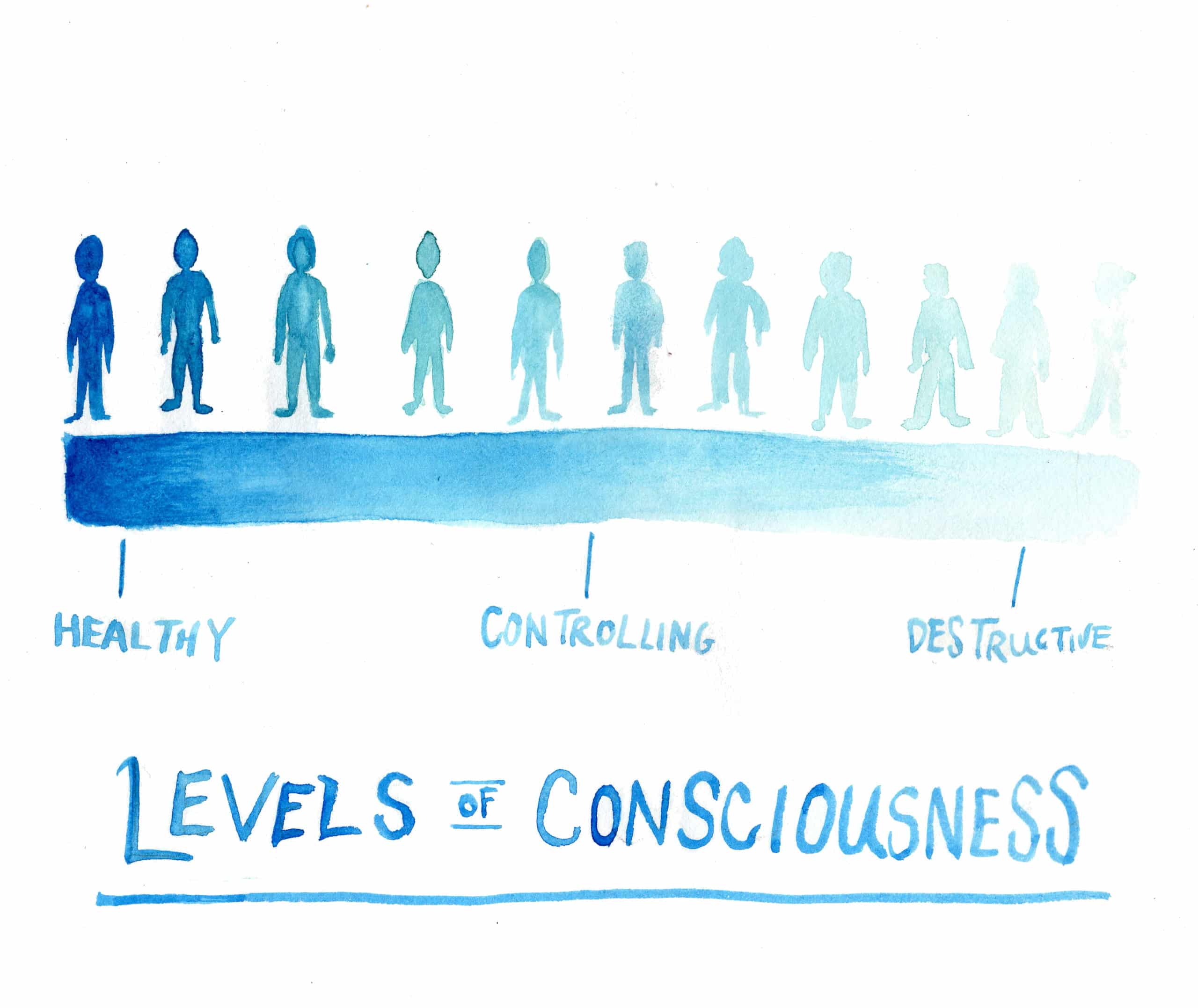
What did your creative process look like in making this project?
My creative process is done daily. It’s as consistent as possible. It’s forgiving (none of my images are perfect), and it involves minimal tools (sketchbook and $20 paint set). Basically, my creative process involves me to sit down and draw an illustration every day and to trust that in consistency and persistence, all things come. I do not wait for inspiration. In fact, inspiration is barely part of the picture. I have to create so rapidly and quickly that I have no time to bother with inspiration. And I find that so freeing. Because the moment I don’t use inspiration as a crutch, I begin to realize that it’s been next to me all along.
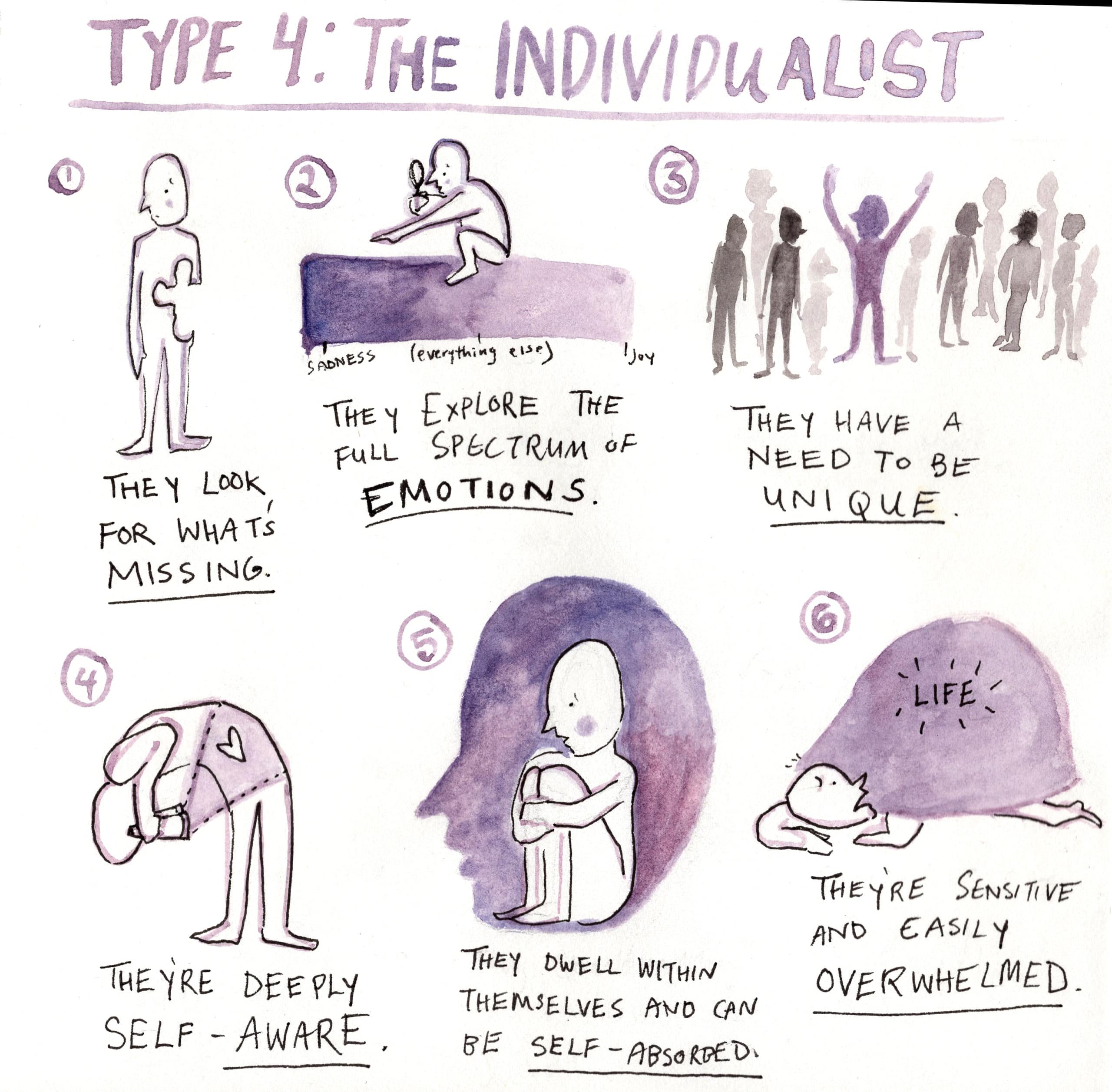
How can people help you get involved?
Right now I’m just encouraging everyone to engage with this material. Check out my different enneagram types on my instagram account and see what resonates with you. Learn more on the enneagram if you’re interested and follow me for more daily drawings.
Where can people follow you or see more of your work?
You can follow me on instagram and see my daily updates: @rockinruksi and you can also check out my other side project, Dear Ruksi: www.dearruksi.com


LET'S CONSPIRE & CREATE
CULTIVATING YOUR VISUAL UNIQUENESS AND STREAMLINING YOUR BRAND'S EVOLUTION

Today’s post is an interview with Rukmini Poddar, a visual designer and illustrator. She’s based in New York City and also works as a designer for The Bhakti Center. I met Rukmini through Jay Shetty, a mutual friend of ours and was particularly inspired with her Enneagram illustrations. For those of you who don’t know, the Enneagram is a personality typing system that consists of nine different types. Everyone is considered to be one single type, although one can have traits belonging to other ones. Check out the interview below.
Where are you based?
New York City
What is your creative zone of genius?
I would hope to think that it lies in the intersection of creative illustration and healthy self awareness.
What is the story of this particular project?
The seed for this project, 100 days of Illustrating the Enneagram, was planted in my heart a few years ago. It started in 2016 when I decided to dedicate 100 days of my life to illustrating the murky, unclear and often obscure emotions I feel in my life. That is when I started to become endlessly fascinated with understanding human emotion and different personality frameworks.
Not too long after, a friend told me that I was drawing Enneagram types without even knowing it. I didn’t know what that meant.
I soon found out that the Enneagram is an incredibly nuanced and specific personality typing system. It’s a powerful tool for understanding the human psyche and ultimately for self growth and transformation.
Unlike most personality typing systems, it focuses on motivation rather than behavior.
Last year I dived into head first into the world of Enneagram when I took 2 intensive Enneagram workshops entitled Excavating Your Ego, hosted by Upbuild. As I was taking these workshops I immediately dreamt of the day that I could help share this knowledge through illustration. I found that visual guides could make the enneagram so much more accessible and understandable to people.
It’s a tool that I found to be so helpful in understanding myself better and for creating stronger sense of empathy in understanding the sufferings and joys of others.
What was your inspiration for creating this?
I find illustration such a powerful way to share knowledge with others. The Enneagram has proven to be so helpful in understanding myself and others better, that I wanted to find a visual language where I could make it more accessible and easily understood to people.
What did your creative process look like in making this project?
My creative process is done daily. It’s as consistent as possible. It’s forgiving (none of my images are perfect), and it involves minimal tools (sketchbook and $20 paint set). Basically, my creative process involves me to sit down and draw an illustration every day and to trust that in consistency and persistence, all things come. I do not wait for inspiration. In fact, inspiration is barely part of the picture. I have to create so rapidly and quickly that I have no time to bother with inspiration. And I find that so freeing. Because the moment I don’t use inspiration as a crutch, I begin to realize that it’s been next to me all along.
How can people help you get involved?
Right now I’m just encouraging everyone to engage with this material. Check out my different enneagram types on my instagram account and see what resonates with you. Learn more on the enneagram if you’re interested and follow me for more daily drawings.
Where can people follow you or see more of your work?
You can follow me on instagram and see my daily updates: @rockinruksi and you can also check out my other side project, Dear Ruksi: www.dearruksi.com

6/14/18
Community Feature: Rukmini Poddar
infuse your vision with a fresh breath of creativity and vitality
BOOK A BRAND PHOTOSHOOT


GET THE DETAILS
GET THE DETAILS
infuse your vision with a fresh breath of creativity and vitality

PODCAST
BRAND INTELLIGENCE
CREATIVE INTELLIGENCE
LIFE INTELLIGENCE

masterfully aligning perception and reality through personal branding


masterfully aligning perception and reality through personal branding

Today’s post is an interview with Rukmini Poddar, a visual designer and illustrator. She’s based in New York City and also works as a designer for The Bhakti Center. I met Rukmini through Jay Shetty, a mutual friend of ours and was particularly inspired with her Enneagram illustrations. For those of you who don’t know, the Enneagram is a personality typing system that consists of nine different types. Everyone is considered to be one single type, although one can have traits belonging to other ones. Check out the interview below.
Where are you based?
New York City
What is your creative zone of genius?
I would hope to think that it lies in the intersection of creative illustration and healthy self awareness.
What is the story of this particular project?
The seed for this project, 100 days of Illustrating the Enneagram, was planted in my heart a few years ago. It started in 2016 when I decided to dedicate 100 days of my life to illustrating the murky, unclear and often obscure emotions I feel in my life. That is when I started to become endlessly fascinated with understanding human emotion and different personality frameworks.
Not too long after, a friend told me that I was drawing Enneagram types without even knowing it. I didn’t know what that meant.
I soon found out that the Enneagram is an incredibly nuanced and specific personality typing system. It’s a powerful tool for understanding the human psyche and ultimately for self growth and transformation.
Unlike most personality typing systems, it focuses on motivation rather than behavior.
Last year I dived into head first into the world of Enneagram when I took 2 intensive Enneagram workshops entitled Excavating Your Ego, hosted by Upbuild. As I was taking these workshops I immediately dreamt of the day that I could help share this knowledge through illustration. I found that visual guides could make the enneagram so much more accessible and understandable to people.
It’s a tool that I found to be so helpful in understanding myself better and for creating stronger sense of empathy in understanding the sufferings and joys of others.
What was your inspiration for creating this?
I find illustration such a powerful way to share knowledge with others. The Enneagram has proven to be so helpful in understanding myself and others better, that I wanted to find a visual language where I could make it more accessible and easily understood to people.
What did your creative process look like in making this project?
My creative process is done daily. It’s as consistent as possible. It’s forgiving (none of my images are perfect), and it involves minimal tools (sketchbook and $20 paint set). Basically, my creative process involves me to sit down and draw an illustration every day and to trust that in consistency and persistence, all things come. I do not wait for inspiration. In fact, inspiration is barely part of the picture. I have to create so rapidly and quickly that I have no time to bother with inspiration. And I find that so freeing. Because the moment I don’t use inspiration as a crutch, I begin to realize that it’s been next to me all along.
How can people help you get involved?
Right now I’m just encouraging everyone to engage with this material. Check out my different enneagram types on my instagram account and see what resonates with you. Learn more on the enneagram if you’re interested and follow me for more daily drawings.
Where can people follow you or see more of your work?
You can follow me on instagram and see my daily updates: @rockinruksi and you can also check out my other side project, Dear Ruksi: www.dearruksi.com
6/14/18
Community Feature: Rukmini Poddar
When you need a trusted creative partner in the room.
Take the Fit Check
Be seen at the level you’re stepping into.

Hey! I'm Nick.
PHOTOGRAPHER
BRAND ALCHEMIST
TEACHER
At vero eos et accusamus et iusto odio dignissimos ducimus qui blanditiis praesentium voluptatum deleniti atque corrupti quos dolores et quas molestias excepturi sint occaecati cupiditate non provident, similique sunt in culpa qui officia deserunt mollitia.
Build authority from the inside out.
Emanate is a creative-direction-led photography experience for entrepreneurs, speakers, and thought leaders in a moment of expansion. This isn’t about better photos. It’s about aligning how you’re seen with who you’ve become. For seasons of rebrand, visibility, and next-level leadership.

Magnetic Authority is a self-guided container for people who feel visible, but not fully anchored.
If your message keeps shifting, your brand feels inconsistent, or your presence doesn’t match your capability yet. This is where you build the foundation before you scale.
Take the Fit Check
Start Here
For founders, creatives, and leaders who want a trusted long-term partner. This isn’t coaching or traditional consulting.
It’s an ongoing creative partnership focused on bringing your personal brand identity to life.
Your brand. Your website. Your visuals.
All shaped as a direct extension of who you are. The work also includes a bespoke process of identifying and aligning the right experts when needed, so nothing gets built out of sync with your core.
Explore the Partnership

Quiet. Precise. Highly Selective.
read the latest
Brand guidelines are static rules for the surface. A Brand Brain is a living codification of identity a team or an AI can generate from. The difference, defined.
We trained six styles of kung fu in one month. Sampling that widely taught me how a creative actually finds the practice worth years: breadth first, the pull as data, then depth.
Travel makes you more creative because unfamiliar places wake up your perception. Why the effect works, and how to bring the sharpened eye home with you.
Your brand photos lag behind you because you kept evolving and the images stayed frozen. Why the gap opens, how to spot it, and what closes it.
The kung fu school had rules: locked-in weekdays, dawn starts, push-ups for lateness. A month inside taught me that constraints you choose are what make depth possible.
A daily creative practice is making one real thing every day, however small, to stay in a proactive state. A working definition, and how to build one that lasts.

AI describes your brand by averaging your public record. How to codify one identity, repeat it everywhere, and get the machines to echo you back accurately.

I’ve photographed Justin Bieber several times and seen fame up close. His stripped-down Coachella set showed the thing I keep relearning about creative work: production amplifies, and only artistry carries.

You recover from creative burnout by treating it as a nervous system state: build real down-cycles, read your own signals, and return to the work you love.

A magnetic personal brand comes from coherence and one clear through-line. Here is how entrepreneurs build one, in order, and the trap that keeps most brands scattered.

I spent a month training kung fu in Wudang at 47, the oldest and slowest learner in the room. What being a beginner again in midlife taught me about pace, comparison, and starting anyway.
You develop taste through thousands of reps of looking closely and deciding what works. A photographer’s honest answer on how taste gets built.

You make a personal brand more coherent by naming the identity underneath it, distilling a one or two word through-line, and bringing the four layers into agreement. The full path, in order.

About the Blogger
I was born in a low middle class conservative religious family in the suburbs of Seattle. Art was and always has been my passion, and more than that a way of life. Starting as a graphic designer, I taught myself photography, built a commercial/editorial business shooting for the worlds biggest brands like Nike, Coca-Cola, Adidas and more. I've also had the opportunity to photograph the world's biggest celebrities like Justin Bieber, Usher, Jessica Alba and more. I've curated a lifestyle around creativity and have learned a lot along the way which I get to share here.
I was born in a low middle class conservative religious family in the suburbs of Seattle. Art was and always has been my passion, and more than that a way of life. Starting as a graphic designer, I taught myself photography, built a commercial/editorial business shooting for the worlds biggest brands like Nike, Coca-Cola, Adidas and more. I've also had the opportunity to photograph the world's biggest celebrities like Justin Bieber, Usher, Jessica Alba and more. I've curated a lifestyle around creativity and have learned a lot along the way which I get to share here.
