


Most creativity books teach technique. Methods. Processes. Step-by-step systems.
These five books teach something else. They teach how to be creative. How to access creativity. How to stay in creative practice. How to overcome what stops you.
Not tactics. Fundamentals. The foundation everything else builds on.
I return to these repeatedly. When stuck. When resistant. When disconnected from creative source. They reset me. Remind me. Restore access.
Here are the five. In order. Why they matter. What they teach.
1. The Creative Act by Rick Rubin
Rick Rubin is legendary music producer. Produced everyone. Every genre. Every era. Consistent genius across decades.
His secret isn’t technical skill. It’s consciousness. Source connection. Intuition. Knowing what’s needed. Without overthinking. Without forcing.
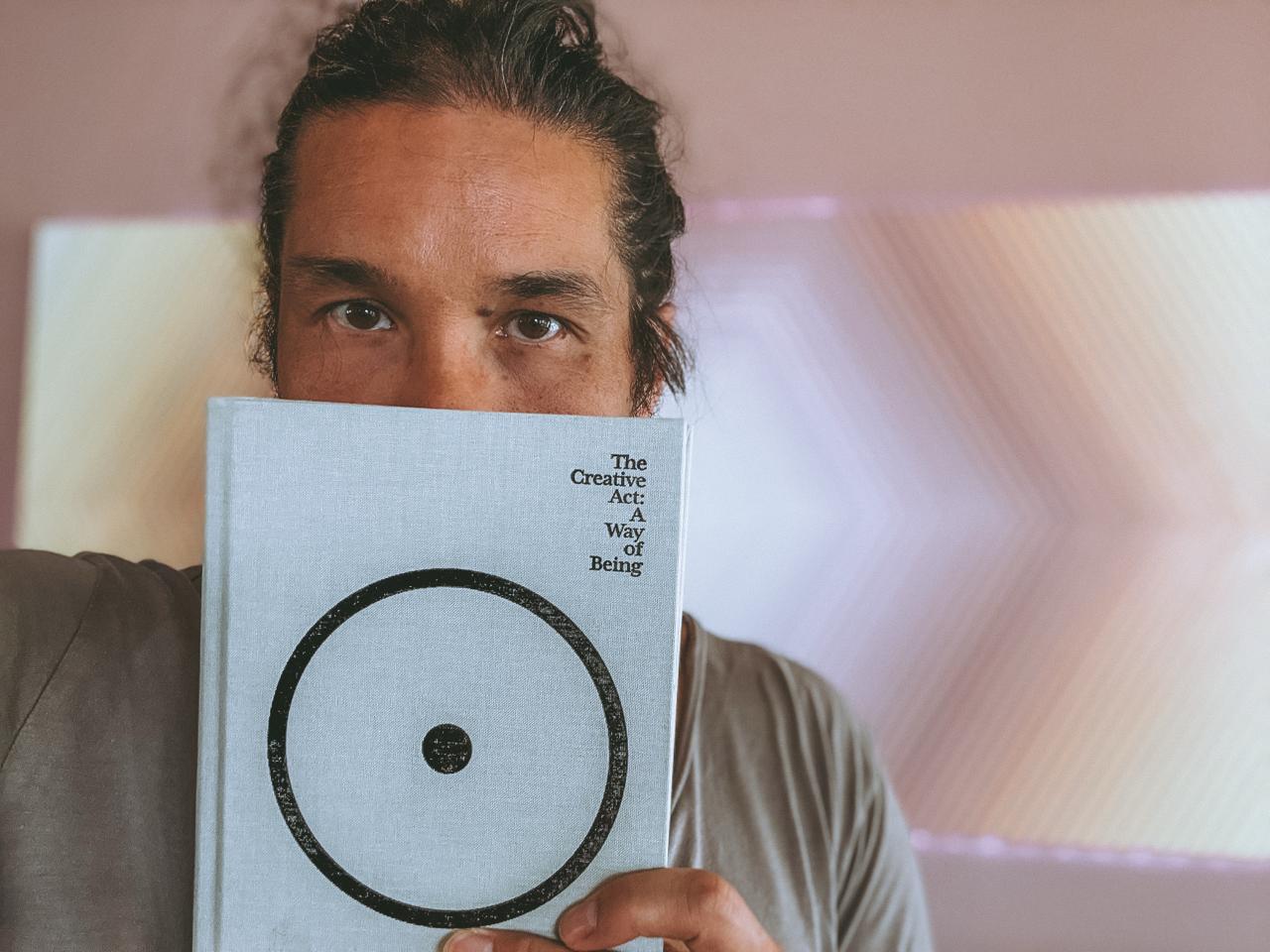
The Creative Act is his creative process. How he operates. How he accesses. How he produces. How he knows.
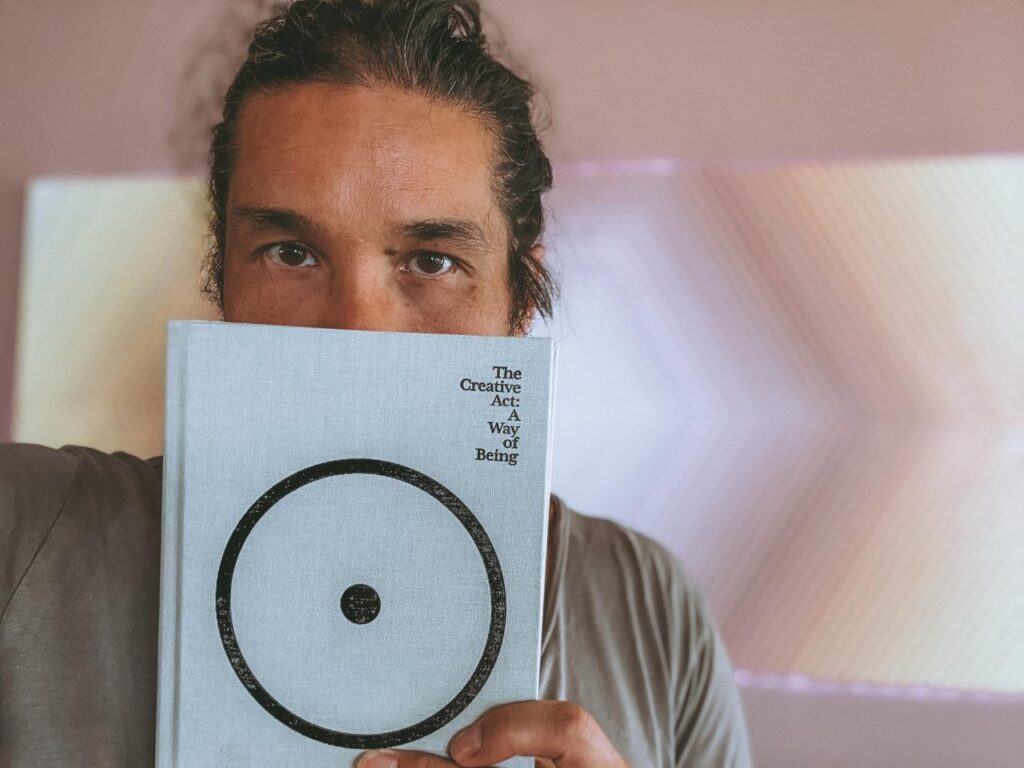
Not prescriptive. Not “do these steps.” More “be in this state.” “Access this awareness.” “Trust this knowing.”
That’s what makes it essential. Most books tell you what to do. This one shows you how to be. As creator. As creative channel. As artist.
Why The Creative Act Matters
Creativity isn’t just doing. It’s being. State you access. Consciousness you inhabit. Source you connect to.
Rubin understands that. Lives that. Teaches that. Through the book. Through every page. Every insight. Every observation.
He talks about intuition. Trusting what you know without knowing how you know. That’s exactly how I work. In photography. In creative direction. In everything.
Sometimes you just know. The shot. The concept. The direction. The choice. Can’t explain why. But it’s right. That knowing—that’s what Rubin teaches.
The book is filled with wisdom. Not advice. Wisdom. About creativity. About art. About process. About being. About accessing. About creating from source instead of from mind.
How It Applies to My Work
Photography is creative act. Every shoot. Every frame. Every choice. You’re accessing something. Beyond technical knowledge. Beyond learned skill.
You’re tapping into intuition. Presence. What’s needed in this moment. For this person. In this light. At this time.
Can’t teach that technically. Can only access it through state. Through consciousness. Through being present and available to what wants to emerge.
That’s what Rubin teaches. That access. That state. That way of being. As creator. Not just maker. Creator.
2. The War of Art by Steven Pressfield
This is the book on resistance. Everything that stops you. From doing the work. Creating the art. Showing up. Being visible.
Resistance is real. It’s powerful. It’s smart. It knows your weaknesses. Your fears. Your excuses. Your patterns.
It uses all of them. To keep you from creating. From sharing. From being seen. From doing what you’re here to do.
Pressfield names it. Describes it. Exposes it. Shows how it operates. How it manifests. How it wins. If you let it.
More importantly: shows how to fight it. Not eliminate it. It never goes away. But fight it. Daily. Consistently. Through showing up. Regardless.
The Resistance Patterns
Resistance shows up everywhere. In creative work. In building authority. In visibility. In claiming space. In doing hard things.
“Not ready yet. Need more time. More skill. More certainty. More preparation.”
That’s resistance talking. Disguised as wisdom. As prudence. As responsible decision-making.
It’s not. It’s fear. Dressed up. Made reasonable. Made acceptable. But still fear. Still resistance. Still keeping you from the work.
Pressfield teaches you to recognize it. To name it. To see through disguises. Then to do the work anyway. Despite it. Not because it’s gone. Because you’re doing it regardless.
Why This Changed Everything
I waited years to call myself photographer. Resistance told me: “Not ready. Not good enough. Need more experience. More credentials. More proof.”
All resistance. All excuses. All keeping me from claiming identity. From doing work publicly. From being actually visible.
Reading The War of Art showed me: resistance never says “now you’re ready.” It always says “not yet.” Forever. Unless you override it.
That permission shift. From waiting for ready to claiming now. Despite resistance. That came from this book.
Now I recognize resistance immediately. See it operating. In myself. In clients. In anyone creating anything. And I know: just do the work. Despite the voice. That’s how you win.
3. Steal Like an Artist by Austin Kleon
Nothing is completely original. Everything builds on what came before. Combinations. Integrations. Remixes. New perspectives on old ideas.
That’s not plagiarism. That’s how art works. How creativity works. How everything develops. Evolves. Improves.
Austin Kleon makes this explicit. Permission-giving. Liberating. You don’t need entirely original idea. You need your take. Your combination. Your voice. Your execution.
Steal ideas. Not content. Not execution. Ideas. Then make them yours. Through your lens. Your style. Your point of view. Your unique combination of influences.
That creates originality. Not from scratch. From synthesis. From integration. From bringing your specific self to borrowed ideas.
The Integration Principle
I’ve stolen ideas from everyone. Every photographer I admire. Every creative director. Every artist. Every maker.
Not their work. Their approaches. Their concepts. Their ways of seeing. Their techniques. Their philosophies.
Then I integrate. With my background. My perspective. My aesthetic. My vision. My way of being. Creates something new. Not copied. Synthesized.
Elevated Realism didn’t come from nowhere. Came from documentary photography. Fashion photography. Portrait photography. Lifestyle photography. All integrated. Through my lens. My way.
That’s stealing like artist. Taking what works. From multiple sources. Combining. Synthesizing. Creating something distinctly yours. From borrowed pieces.
Permission to Borrow
Most people feel guilty. About being influenced. About borrowing ideas. About not being “completely original.”
Kleon gives permission. To borrow. To be influenced. To steal ideas. Then make them yours. Through execution. Through combination. Through your unique self.
That permission is liberating. You don’t need unprecedented idea. You need your version. Your take. Your execution. That’s enough. That’s actually how it works.
Stop waiting for completely original idea. Start stealing good ideas. Then executing them your way. With your style. Your perspective. Your voice. That’s the work.
4. Damn Good Advice by George Lois
George Lois is advertising legend. Founded agencies. Created iconic campaigns. Decades of creative excellence. In highly commercial field.
His book: pure distilled wisdom. About creativity. About ideas. About execution. About showing up. About doing great work. Consistently. In real world. With real constraints.
Not theoretical. Practical. Battle-tested. Proven. Through decades. Through hundreds of campaigns. Through actual creative work. At highest level.
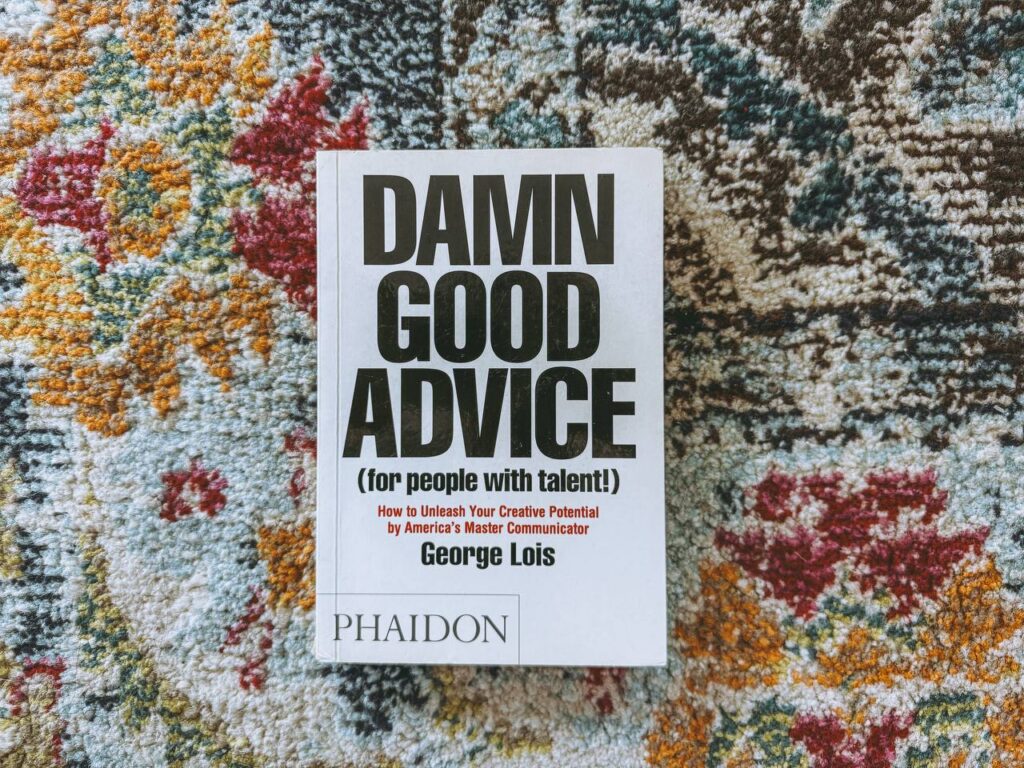
The advice is direct. Blunt. No fluff. No filler. Just: here’s what works. Here’s what doesn’t. Here’s how to do it. Here’s how to think about it.
That directness is valuable. Cuts through noise. Cuts through theory. Cuts through wishful thinking. Gets to what actually matters. What actually works.
The Commercial Creativity
Lois teaches creativity in constraints. With deadlines. With clients. With budgets. With real-world limitations. With business needs.
Not art for art’s sake. Art that works. That sells. That communicates. That achieves goals. While still being creative. Original. Excellent.
That’s harder than pure art. Easier to be creative without constraints. Without clients. Without deadlines. Without business objectives.
Real creativity happens in constraints. That’s what I do. Commercial photography. Creative direction. For clients. With objectives. With budgets. With timelines.
Lois shows how to excel there. How to be creative there. How to do excellent work there. Not despite constraints. Within them. Using them.
The Execution Focus
Ideas are easy. Everyone has ideas. Execution is hard. Execution is what matters. Execution is what separates professionals from dreamers.
Lois hammers this. Repeatedly. Throughout book. Ideas without execution are worthless. Execution without ideas is mechanical. Both needed. But execution matters more.
Because great execution of good idea beats poor execution of great idea. Every time. In real world. Where results matter.
I see this constantly. Clients with brilliant concepts. Poor execution. Doesn’t work. Clients with simple concepts. Excellent execution. Works beautifully.
Execution is everything. Showing up. Doing the work. Delivering. Consistently. At high level. That’s the game. That’s what Lois teaches.
5. Big Magic by Elizabeth Gilbert
Ideas are alive. Floating. Available. In universe. In consciousness. In collective field. Waiting. For someone to grab them. Bring them to life.
Elizabeth Gilbert makes this case. Beautifully. Compellingly. Ideas want to be born. They find people. Multiple people sometimes. Whoever acts wins.
Not whoever thinks about it longest. Not whoever is most qualified. Whoever actually does it. Brings it into form. Into reality. Into existence.
That’s both liberating and urgent. Liberating: the idea found you. You’re not making it up. It’s real. It wants to exist. Through you.
Urgent: if you don’t act, idea will find someone else. Someone who will. Who will actually do the work. Make it real. Birth it.
The Idea Tapping
Some people tap into more ideas. More easily. More frequently. That’s not luck. It’s practice. It’s openness. It’s availability. It’s willingness.
You become better receiver. By creating. By acting. By bringing ideas into form. Ideas learn: this person acts. This person executes. This person births.
Then more ideas come. To reliable vessel. To someone who actually does something. With ideas. Instead of just collecting them. Thinking about them. Waiting with them.
I experience this. Ideas come. For shoots. For concepts. For content. For everything. Constantly. Because I act on them. Consistently. Ideas trust me. To execute. To bring to life.
That’s cultivated. Through practice. Through doing. Through showing up. Through creating. Over and over. Building trust. With creative source. With idea field. With whatever you call it.
The Creative Living
Gilbert teaches creative living. Not just making art. Living creatively. Being creative. In all things. All ways. All contexts.
That’s different than “being artist.” Creative living is approach. To everything. To problems. To opportunities. To challenges. To life.
You don’t need to be artist to live creatively. To access creativity. To bring creative approach. To daily life. To work. To relationships. To everything.
That resonates deeply. I’m photographer. But I’m creatively living. In business. In relationships. In how I solve problems. In how I build. In everything.
Creativity as medicine. As practice. As way of being. Not just thing you do. Way you live. That’s what Gilbert teaches. Beautifully.
How These Five Work Together
Read in this order. They build on each other. Create complete foundation.
The Creative Act: How to access creativity. How to be in creative state. How to connect to source.
The War of Art: How to overcome resistance. How to show up. How to do the work. Despite everything stopping you.
Steal Like an Artist: Permission to borrow. Permission to be influenced. Permission to synthesize. Your way.
Damn Good Advice: How to execute. In real world. With constraints. With excellence. Consistently.
Big Magic: Why ideas come. How to receive them. How to live creatively. In everything.
Together: complete system. For creating. For living creatively. For doing the work. For building body of work. Over time.
3 Takeaways
- The Creative Act by Rick Rubin teaches accessing creativity through consciousness, source connection, and intuition rather than through technical processes or step-by-step methods, showing how to be creative not just what to do by trusting what you know without knowing how you know it which is exactly how photography and creative direction work at highest levels. The War of Art by Steven Pressfield exposes resistance in all its disguises including not ready yet, need more time, and need more preparation showing these as fear dressed up as wisdom, and teaches that resistance never says you are ready but always says not yet forever unless you override it by doing work anyway, which gave me permission to stop waiting and claim photographer identity immediately despite the voice saying to wait.
- Steal Like an Artist by Austin Kleon liberates creators by showing nothing is completely original but everything builds on what came before through combinations, integrations, and remixes with permission to steal ideas not content then make them yours through your lens style point of view and unique combination of influences creating originality through synthesis not from scratch. Damn Good Advice by George Lois teaches commercial creativity within real-world constraints including deadlines clients budgets and business objectives showing great execution of good idea beats poor execution of great idea every time because ideas without execution are worthless while execution focus and showing up consistently at high level separates professionals from dreamers in actual commercial work where results matter.
- Big Magic by Elizabeth Gilbert shows ideas are alive, floating in universe waiting for someone to grab them and bring to life, making case that ideas find multiple people but whoever acts wins not whoever thinks longest or is most qualified, creating both liberation because idea found you and wants to exist through you, and urgency because if you do not act idea will find someone else who will execute. Creative living is approach to everything not just art making where you do not need to be artist to access creativity and bring creative approach to daily life, work, relationships, and all contexts, and you become better idea receiver by creating consistently because ideas learn this person acts and executes becoming reliable vessel that ideas trust to bring them into form through repeated practice of showing up and doing over time.


LET'S CONSPIRE & CREATE
CULTIVATING YOUR VISUAL UNIQUENESS AND STREAMLINING YOUR BRAND'S EVOLUTION

Most creativity books teach technique. Methods. Processes. Step-by-step systems.
These five books teach something else. They teach how to be creative. How to access creativity. How to stay in creative practice. How to overcome what stops you.
Not tactics. Fundamentals. The foundation everything else builds on.
I return to these repeatedly. When stuck. When resistant. When disconnected from creative source. They reset me. Remind me. Restore access.
Here are the five. In order. Why they matter. What they teach.
1. The Creative Act by Rick Rubin
Rick Rubin is legendary music producer. Produced everyone. Every genre. Every era. Consistent genius across decades.
His secret isn’t technical skill. It’s consciousness. Source connection. Intuition. Knowing what’s needed. Without overthinking. Without forcing.
The Creative Act is his creative process. How he operates. How he accesses. How he produces. How he knows.
Not prescriptive. Not “do these steps.” More “be in this state.” “Access this awareness.” “Trust this knowing.”
That’s what makes it essential. Most books tell you what to do. This one shows you how to be. As creator. As creative channel. As artist.
Why The Creative Act Matters
Creativity isn’t just doing. It’s being. State you access. Consciousness you inhabit. Source you connect to.
Rubin understands that. Lives that. Teaches that. Through the book. Through every page. Every insight. Every observation.
He talks about intuition. Trusting what you know without knowing how you know. That’s exactly how I work. In photography. In creative direction. In everything.
Sometimes you just know. The shot. The concept. The direction. The choice. Can’t explain why. But it’s right. That knowing—that’s what Rubin teaches.
The book is filled with wisdom. Not advice. Wisdom. About creativity. About art. About process. About being. About accessing. About creating from source instead of from mind.
How It Applies to My Work
Photography is creative act. Every shoot. Every frame. Every choice. You’re accessing something. Beyond technical knowledge. Beyond learned skill.
You’re tapping into intuition. Presence. What’s needed in this moment. For this person. In this light. At this time.
Can’t teach that technically. Can only access it through state. Through consciousness. Through being present and available to what wants to emerge.
That’s what Rubin teaches. That access. That state. That way of being. As creator. Not just maker. Creator.
2. The War of Art by Steven Pressfield
This is the book on resistance. Everything that stops you. From doing the work. Creating the art. Showing up. Being visible.
Resistance is real. It’s powerful. It’s smart. It knows your weaknesses. Your fears. Your excuses. Your patterns.
It uses all of them. To keep you from creating. From sharing. From being seen. From doing what you’re here to do.
Pressfield names it. Describes it. Exposes it. Shows how it operates. How it manifests. How it wins. If you let it.
More importantly: shows how to fight it. Not eliminate it. It never goes away. But fight it. Daily. Consistently. Through showing up. Regardless.
The Resistance Patterns
Resistance shows up everywhere. In creative work. In building authority. In visibility. In claiming space. In doing hard things.
“Not ready yet. Need more time. More skill. More certainty. More preparation.”
That’s resistance talking. Disguised as wisdom. As prudence. As responsible decision-making.
It’s not. It’s fear. Dressed up. Made reasonable. Made acceptable. But still fear. Still resistance. Still keeping you from the work.
Pressfield teaches you to recognize it. To name it. To see through disguises. Then to do the work anyway. Despite it. Not because it’s gone. Because you’re doing it regardless.
Why This Changed Everything
I waited years to call myself photographer. Resistance told me: “Not ready. Not good enough. Need more experience. More credentials. More proof.”
All resistance. All excuses. All keeping me from claiming identity. From doing work publicly. From being actually visible.
Reading The War of Art showed me: resistance never says “now you’re ready.” It always says “not yet.” Forever. Unless you override it.
That permission shift. From waiting for ready to claiming now. Despite resistance. That came from this book.
Now I recognize resistance immediately. See it operating. In myself. In clients. In anyone creating anything. And I know: just do the work. Despite the voice. That’s how you win.
3. Steal Like an Artist by Austin Kleon
Nothing is completely original. Everything builds on what came before. Combinations. Integrations. Remixes. New perspectives on old ideas.
That’s not plagiarism. That’s how art works. How creativity works. How everything develops. Evolves. Improves.
Austin Kleon makes this explicit. Permission-giving. Liberating. You don’t need entirely original idea. You need your take. Your combination. Your voice. Your execution.
Steal ideas. Not content. Not execution. Ideas. Then make them yours. Through your lens. Your style. Your point of view. Your unique combination of influences.
That creates originality. Not from scratch. From synthesis. From integration. From bringing your specific self to borrowed ideas.
The Integration Principle
I’ve stolen ideas from everyone. Every photographer I admire. Every creative director. Every artist. Every maker.
Not their work. Their approaches. Their concepts. Their ways of seeing. Their techniques. Their philosophies.
Then I integrate. With my background. My perspective. My aesthetic. My vision. My way of being. Creates something new. Not copied. Synthesized.
Elevated Realism didn’t come from nowhere. Came from documentary photography. Fashion photography. Portrait photography. Lifestyle photography. All integrated. Through my lens. My way.
That’s stealing like artist. Taking what works. From multiple sources. Combining. Synthesizing. Creating something distinctly yours. From borrowed pieces.
Permission to Borrow
Most people feel guilty. About being influenced. About borrowing ideas. About not being “completely original.”
Kleon gives permission. To borrow. To be influenced. To steal ideas. Then make them yours. Through execution. Through combination. Through your unique self.
That permission is liberating. You don’t need unprecedented idea. You need your version. Your take. Your execution. That’s enough. That’s actually how it works.
Stop waiting for completely original idea. Start stealing good ideas. Then executing them your way. With your style. Your perspective. Your voice. That’s the work.
4. Damn Good Advice by George Lois
George Lois is advertising legend. Founded agencies. Created iconic campaigns. Decades of creative excellence. In highly commercial field.
His book: pure distilled wisdom. About creativity. About ideas. About execution. About showing up. About doing great work. Consistently. In real world. With real constraints.
Not theoretical. Practical. Battle-tested. Proven. Through decades. Through hundreds of campaigns. Through actual creative work. At highest level.
The advice is direct. Blunt. No fluff. No filler. Just: here’s what works. Here’s what doesn’t. Here’s how to do it. Here’s how to think about it.
That directness is valuable. Cuts through noise. Cuts through theory. Cuts through wishful thinking. Gets to what actually matters. What actually works.
The Commercial Creativity
Lois teaches creativity in constraints. With deadlines. With clients. With budgets. With real-world limitations. With business needs.
Not art for art’s sake. Art that works. That sells. That communicates. That achieves goals. While still being creative. Original. Excellent.
That’s harder than pure art. Easier to be creative without constraints. Without clients. Without deadlines. Without business objectives.
Real creativity happens in constraints. That’s what I do. Commercial photography. Creative direction. For clients. With objectives. With budgets. With timelines.
Lois shows how to excel there. How to be creative there. How to do excellent work there. Not despite constraints. Within them. Using them.
The Execution Focus
Ideas are easy. Everyone has ideas. Execution is hard. Execution is what matters. Execution is what separates professionals from dreamers.
Lois hammers this. Repeatedly. Throughout book. Ideas without execution are worthless. Execution without ideas is mechanical. Both needed. But execution matters more.
Because great execution of good idea beats poor execution of great idea. Every time. In real world. Where results matter.
I see this constantly. Clients with brilliant concepts. Poor execution. Doesn’t work. Clients with simple concepts. Excellent execution. Works beautifully.
Execution is everything. Showing up. Doing the work. Delivering. Consistently. At high level. That’s the game. That’s what Lois teaches.
5. Big Magic by Elizabeth Gilbert
Ideas are alive. Floating. Available. In universe. In consciousness. In collective field. Waiting. For someone to grab them. Bring them to life.
Elizabeth Gilbert makes this case. Beautifully. Compellingly. Ideas want to be born. They find people. Multiple people sometimes. Whoever acts wins.
Not whoever thinks about it longest. Not whoever is most qualified. Whoever actually does it. Brings it into form. Into reality. Into existence.
That’s both liberating and urgent. Liberating: the idea found you. You’re not making it up. It’s real. It wants to exist. Through you.
Urgent: if you don’t act, idea will find someone else. Someone who will. Who will actually do the work. Make it real. Birth it.
The Idea Tapping
Some people tap into more ideas. More easily. More frequently. That’s not luck. It’s practice. It’s openness. It’s availability. It’s willingness.
You become better receiver. By creating. By acting. By bringing ideas into form. Ideas learn: this person acts. This person executes. This person births.
Then more ideas come. To reliable vessel. To someone who actually does something. With ideas. Instead of just collecting them. Thinking about them. Waiting with them.
I experience this. Ideas come. For shoots. For concepts. For content. For everything. Constantly. Because I act on them. Consistently. Ideas trust me. To execute. To bring to life.
That’s cultivated. Through practice. Through doing. Through showing up. Through creating. Over and over. Building trust. With creative source. With idea field. With whatever you call it.
The Creative Living
Gilbert teaches creative living. Not just making art. Living creatively. Being creative. In all things. All ways. All contexts.
That’s different than “being artist.” Creative living is approach. To everything. To problems. To opportunities. To challenges. To life.
You don’t need to be artist to live creatively. To access creativity. To bring creative approach. To daily life. To work. To relationships. To everything.
That resonates deeply. I’m photographer. But I’m creatively living. In business. In relationships. In how I solve problems. In how I build. In everything.
Creativity as medicine. As practice. As way of being. Not just thing you do. Way you live. That’s what Gilbert teaches. Beautifully.
How These Five Work Together
Read in this order. They build on each other. Create complete foundation.
The Creative Act: How to access creativity. How to be in creative state. How to connect to source.
The War of Art: How to overcome resistance. How to show up. How to do the work. Despite everything stopping you.
Steal Like an Artist: Permission to borrow. Permission to be influenced. Permission to synthesize. Your way.
Damn Good Advice: How to execute. In real world. With constraints. With excellence. Consistently.
Big Magic: Why ideas come. How to receive them. How to live creatively. In everything.
Together: complete system. For creating. For living creatively. For doing the work. For building body of work. Over time.
3 Takeaways
- The Creative Act by Rick Rubin teaches accessing creativity through consciousness, source connection, and intuition rather than through technical processes or step-by-step methods, showing how to be creative not just what to do by trusting what you know without knowing how you know it which is exactly how photography and creative direction work at highest levels. The War of Art by Steven Pressfield exposes resistance in all its disguises including not ready yet, need more time, and need more preparation showing these as fear dressed up as wisdom, and teaches that resistance never says you are ready but always says not yet forever unless you override it by doing work anyway, which gave me permission to stop waiting and claim photographer identity immediately despite the voice saying to wait.
- Steal Like an Artist by Austin Kleon liberates creators by showing nothing is completely original but everything builds on what came before through combinations, integrations, and remixes with permission to steal ideas not content then make them yours through your lens style point of view and unique combination of influences creating originality through synthesis not from scratch. Damn Good Advice by George Lois teaches commercial creativity within real-world constraints including deadlines clients budgets and business objectives showing great execution of good idea beats poor execution of great idea every time because ideas without execution are worthless while execution focus and showing up consistently at high level separates professionals from dreamers in actual commercial work where results matter.
- Big Magic by Elizabeth Gilbert shows ideas are alive, floating in universe waiting for someone to grab them and bring to life, making case that ideas find multiple people but whoever acts wins not whoever thinks longest or is most qualified, creating both liberation because idea found you and wants to exist through you, and urgency because if you do not act idea will find someone else who will execute. Creative living is approach to everything not just art making where you do not need to be artist to access creativity and bring creative approach to daily life, work, relationships, and all contexts, and you become better idea receiver by creating consistently because ideas learn this person acts and executes becoming reliable vessel that ideas trust to bring them into form through repeated practice of showing up and doing over time.
2/25/26
Five Books That Changed How I Create
infuse your vision with a fresh breath of creativity and vitality
BOOK A BRAND PHOTOSHOOT


GET THE DETAILS
GET THE DETAILS
infuse your vision with a fresh breath of creativity and vitality

PODCAST
BRAND INTELLIGENCE
CREATIVE INTELLIGENCE
LIFE INTELLIGENCE


masterfully aligning perception and reality through personal branding


masterfully aligning perception and reality through personal branding


Most creativity books teach technique. Methods. Processes. Step-by-step systems.
These five books teach something else. They teach how to be creative. How to access creativity. How to stay in creative practice. How to overcome what stops you.
Not tactics. Fundamentals. The foundation everything else builds on.
I return to these repeatedly. When stuck. When resistant. When disconnected from creative source. They reset me. Remind me. Restore access.
Here are the five. In order. Why they matter. What they teach.
1. The Creative Act by Rick Rubin
Rick Rubin is legendary music producer. Produced everyone. Every genre. Every era. Consistent genius across decades.
His secret isn’t technical skill. It’s consciousness. Source connection. Intuition. Knowing what’s needed. Without overthinking. Without forcing.
The Creative Act is his creative process. How he operates. How he accesses. How he produces. How he knows.
Not prescriptive. Not “do these steps.” More “be in this state.” “Access this awareness.” “Trust this knowing.”
That’s what makes it essential. Most books tell you what to do. This one shows you how to be. As creator. As creative channel. As artist.
Why The Creative Act Matters
Creativity isn’t just doing. It’s being. State you access. Consciousness you inhabit. Source you connect to.
Rubin understands that. Lives that. Teaches that. Through the book. Through every page. Every insight. Every observation.
He talks about intuition. Trusting what you know without knowing how you know. That’s exactly how I work. In photography. In creative direction. In everything.
Sometimes you just know. The shot. The concept. The direction. The choice. Can’t explain why. But it’s right. That knowing—that’s what Rubin teaches.
The book is filled with wisdom. Not advice. Wisdom. About creativity. About art. About process. About being. About accessing. About creating from source instead of from mind.
How It Applies to My Work
Photography is creative act. Every shoot. Every frame. Every choice. You’re accessing something. Beyond technical knowledge. Beyond learned skill.
You’re tapping into intuition. Presence. What’s needed in this moment. For this person. In this light. At this time.
Can’t teach that technically. Can only access it through state. Through consciousness. Through being present and available to what wants to emerge.
That’s what Rubin teaches. That access. That state. That way of being. As creator. Not just maker. Creator.
2. The War of Art by Steven Pressfield
This is the book on resistance. Everything that stops you. From doing the work. Creating the art. Showing up. Being visible.
Resistance is real. It’s powerful. It’s smart. It knows your weaknesses. Your fears. Your excuses. Your patterns.
It uses all of them. To keep you from creating. From sharing. From being seen. From doing what you’re here to do.
Pressfield names it. Describes it. Exposes it. Shows how it operates. How it manifests. How it wins. If you let it.
More importantly: shows how to fight it. Not eliminate it. It never goes away. But fight it. Daily. Consistently. Through showing up. Regardless.
The Resistance Patterns
Resistance shows up everywhere. In creative work. In building authority. In visibility. In claiming space. In doing hard things.
“Not ready yet. Need more time. More skill. More certainty. More preparation.”
That’s resistance talking. Disguised as wisdom. As prudence. As responsible decision-making.
It’s not. It’s fear. Dressed up. Made reasonable. Made acceptable. But still fear. Still resistance. Still keeping you from the work.
Pressfield teaches you to recognize it. To name it. To see through disguises. Then to do the work anyway. Despite it. Not because it’s gone. Because you’re doing it regardless.
Why This Changed Everything
I waited years to call myself photographer. Resistance told me: “Not ready. Not good enough. Need more experience. More credentials. More proof.”
All resistance. All excuses. All keeping me from claiming identity. From doing work publicly. From being actually visible.
Reading The War of Art showed me: resistance never says “now you’re ready.” It always says “not yet.” Forever. Unless you override it.
That permission shift. From waiting for ready to claiming now. Despite resistance. That came from this book.
Now I recognize resistance immediately. See it operating. In myself. In clients. In anyone creating anything. And I know: just do the work. Despite the voice. That’s how you win.
3. Steal Like an Artist by Austin Kleon
Nothing is completely original. Everything builds on what came before. Combinations. Integrations. Remixes. New perspectives on old ideas.
That’s not plagiarism. That’s how art works. How creativity works. How everything develops. Evolves. Improves.
Austin Kleon makes this explicit. Permission-giving. Liberating. You don’t need entirely original idea. You need your take. Your combination. Your voice. Your execution.
Steal ideas. Not content. Not execution. Ideas. Then make them yours. Through your lens. Your style. Your point of view. Your unique combination of influences.
That creates originality. Not from scratch. From synthesis. From integration. From bringing your specific self to borrowed ideas.
The Integration Principle
I’ve stolen ideas from everyone. Every photographer I admire. Every creative director. Every artist. Every maker.
Not their work. Their approaches. Their concepts. Their ways of seeing. Their techniques. Their philosophies.
Then I integrate. With my background. My perspective. My aesthetic. My vision. My way of being. Creates something new. Not copied. Synthesized.
Elevated Realism didn’t come from nowhere. Came from documentary photography. Fashion photography. Portrait photography. Lifestyle photography. All integrated. Through my lens. My way.
That’s stealing like artist. Taking what works. From multiple sources. Combining. Synthesizing. Creating something distinctly yours. From borrowed pieces.
Permission to Borrow
Most people feel guilty. About being influenced. About borrowing ideas. About not being “completely original.”
Kleon gives permission. To borrow. To be influenced. To steal ideas. Then make them yours. Through execution. Through combination. Through your unique self.
That permission is liberating. You don’t need unprecedented idea. You need your version. Your take. Your execution. That’s enough. That’s actually how it works.
Stop waiting for completely original idea. Start stealing good ideas. Then executing them your way. With your style. Your perspective. Your voice. That’s the work.
4. Damn Good Advice by George Lois
George Lois is advertising legend. Founded agencies. Created iconic campaigns. Decades of creative excellence. In highly commercial field.
His book: pure distilled wisdom. About creativity. About ideas. About execution. About showing up. About doing great work. Consistently. In real world. With real constraints.
Not theoretical. Practical. Battle-tested. Proven. Through decades. Through hundreds of campaigns. Through actual creative work. At highest level.
The advice is direct. Blunt. No fluff. No filler. Just: here’s what works. Here’s what doesn’t. Here’s how to do it. Here’s how to think about it.
That directness is valuable. Cuts through noise. Cuts through theory. Cuts through wishful thinking. Gets to what actually matters. What actually works.
The Commercial Creativity
Lois teaches creativity in constraints. With deadlines. With clients. With budgets. With real-world limitations. With business needs.
Not art for art’s sake. Art that works. That sells. That communicates. That achieves goals. While still being creative. Original. Excellent.
That’s harder than pure art. Easier to be creative without constraints. Without clients. Without deadlines. Without business objectives.
Real creativity happens in constraints. That’s what I do. Commercial photography. Creative direction. For clients. With objectives. With budgets. With timelines.
Lois shows how to excel there. How to be creative there. How to do excellent work there. Not despite constraints. Within them. Using them.
The Execution Focus
Ideas are easy. Everyone has ideas. Execution is hard. Execution is what matters. Execution is what separates professionals from dreamers.
Lois hammers this. Repeatedly. Throughout book. Ideas without execution are worthless. Execution without ideas is mechanical. Both needed. But execution matters more.
Because great execution of good idea beats poor execution of great idea. Every time. In real world. Where results matter.
I see this constantly. Clients with brilliant concepts. Poor execution. Doesn’t work. Clients with simple concepts. Excellent execution. Works beautifully.
Execution is everything. Showing up. Doing the work. Delivering. Consistently. At high level. That’s the game. That’s what Lois teaches.
5. Big Magic by Elizabeth Gilbert
Ideas are alive. Floating. Available. In universe. In consciousness. In collective field. Waiting. For someone to grab them. Bring them to life.
Elizabeth Gilbert makes this case. Beautifully. Compellingly. Ideas want to be born. They find people. Multiple people sometimes. Whoever acts wins.
Not whoever thinks about it longest. Not whoever is most qualified. Whoever actually does it. Brings it into form. Into reality. Into existence.
That’s both liberating and urgent. Liberating: the idea found you. You’re not making it up. It’s real. It wants to exist. Through you.
Urgent: if you don’t act, idea will find someone else. Someone who will. Who will actually do the work. Make it real. Birth it.
The Idea Tapping
Some people tap into more ideas. More easily. More frequently. That’s not luck. It’s practice. It’s openness. It’s availability. It’s willingness.
You become better receiver. By creating. By acting. By bringing ideas into form. Ideas learn: this person acts. This person executes. This person births.
Then more ideas come. To reliable vessel. To someone who actually does something. With ideas. Instead of just collecting them. Thinking about them. Waiting with them.
I experience this. Ideas come. For shoots. For concepts. For content. For everything. Constantly. Because I act on them. Consistently. Ideas trust me. To execute. To bring to life.
That’s cultivated. Through practice. Through doing. Through showing up. Through creating. Over and over. Building trust. With creative source. With idea field. With whatever you call it.
The Creative Living
Gilbert teaches creative living. Not just making art. Living creatively. Being creative. In all things. All ways. All contexts.
That’s different than “being artist.” Creative living is approach. To everything. To problems. To opportunities. To challenges. To life.
You don’t need to be artist to live creatively. To access creativity. To bring creative approach. To daily life. To work. To relationships. To everything.
That resonates deeply. I’m photographer. But I’m creatively living. In business. In relationships. In how I solve problems. In how I build. In everything.
Creativity as medicine. As practice. As way of being. Not just thing you do. Way you live. That’s what Gilbert teaches. Beautifully.
How These Five Work Together
Read in this order. They build on each other. Create complete foundation.
The Creative Act: How to access creativity. How to be in creative state. How to connect to source.
The War of Art: How to overcome resistance. How to show up. How to do the work. Despite everything stopping you.
Steal Like an Artist: Permission to borrow. Permission to be influenced. Permission to synthesize. Your way.
Damn Good Advice: How to execute. In real world. With constraints. With excellence. Consistently.
Big Magic: Why ideas come. How to receive them. How to live creatively. In everything.
Together: complete system. For creating. For living creatively. For doing the work. For building body of work. Over time.
3 Takeaways
- The Creative Act by Rick Rubin teaches accessing creativity through consciousness, source connection, and intuition rather than through technical processes or step-by-step methods, showing how to be creative not just what to do by trusting what you know without knowing how you know it which is exactly how photography and creative direction work at highest levels. The War of Art by Steven Pressfield exposes resistance in all its disguises including not ready yet, need more time, and need more preparation showing these as fear dressed up as wisdom, and teaches that resistance never says you are ready but always says not yet forever unless you override it by doing work anyway, which gave me permission to stop waiting and claim photographer identity immediately despite the voice saying to wait.
- Steal Like an Artist by Austin Kleon liberates creators by showing nothing is completely original but everything builds on what came before through combinations, integrations, and remixes with permission to steal ideas not content then make them yours through your lens style point of view and unique combination of influences creating originality through synthesis not from scratch. Damn Good Advice by George Lois teaches commercial creativity within real-world constraints including deadlines clients budgets and business objectives showing great execution of good idea beats poor execution of great idea every time because ideas without execution are worthless while execution focus and showing up consistently at high level separates professionals from dreamers in actual commercial work where results matter.
- Big Magic by Elizabeth Gilbert shows ideas are alive, floating in universe waiting for someone to grab them and bring to life, making case that ideas find multiple people but whoever acts wins not whoever thinks longest or is most qualified, creating both liberation because idea found you and wants to exist through you, and urgency because if you do not act idea will find someone else who will execute. Creative living is approach to everything not just art making where you do not need to be artist to access creativity and bring creative approach to daily life, work, relationships, and all contexts, and you become better idea receiver by creating consistently because ideas learn this person acts and executes becoming reliable vessel that ideas trust to bring them into form through repeated practice of showing up and doing over time.
2/25/26
Five Books That Changed How I Create
When you need a trusted creative partner in the room.
Take the Fit Check
Be seen at the level you’re stepping into.

Hey! I'm Nick.
PHOTOGRAPHER
BRAND ALCHEMIST
TEACHER
At vero eos et accusamus et iusto odio dignissimos ducimus qui blanditiis praesentium voluptatum deleniti atque corrupti quos dolores et quas molestias excepturi sint occaecati cupiditate non provident, similique sunt in culpa qui officia deserunt mollitia.
Build authority from the inside out.
Emanate is a creative-direction-led photography experience for entrepreneurs, speakers, and thought leaders in a moment of expansion. This isn’t about better photos. It’s about aligning how you’re seen with who you’ve become. For seasons of rebrand, visibility, and next-level leadership.

Magnetic Authority is a self-guided container for people who feel visible, but not fully anchored.
If your message keeps shifting, your brand feels inconsistent, or your presence doesn’t match your capability yet. This is where you build the foundation before you scale.
Take the Fit Check
Start Here
For founders, creatives, and leaders who want a trusted long-term partner. This isn’t coaching or traditional consulting.
It’s an ongoing creative partnership focused on bringing your personal brand identity to life.
Your brand. Your website. Your visuals.
All shaped as a direct extension of who you are. The work also includes a bespoke process of identifying and aligning the right experts when needed, so nothing gets built out of sync with your core.
Explore the Partnership

Quiet. Precise. Highly Selective.
NEXT post
PREVIOUS post
read the latest
Your brand photos lag behind you because you kept evolving and the images stayed frozen. Why the gap opens, how to spot it, and what closes it.
The kung fu school had rules: locked-in weekdays, dawn starts, push-ups for lateness. A month inside taught me that constraints you choose are what make depth possible.
A daily creative practice is making one real thing every day, however small, to stay in a proactive state. A working definition, and how to build one that lasts.
AI describes your brand by averaging your public record. How to codify one identity, repeat it everywhere, and get the machines to echo you back accurately.
I’ve photographed Justin Bieber several times and seen fame up close. His stripped-down Coachella set showed the thing I keep relearning about creative work: production amplifies, and only artistry carries.
You recover from creative burnout by treating it as a nervous system state: build real down-cycles, read your own signals, and return to the work you love.

A magnetic personal brand comes from coherence and one clear through-line. Here is how entrepreneurs build one, in order, and the trap that keeps most brands scattered.

I spent a month training kung fu in Wudang at 47, the oldest and slowest learner in the room. What being a beginner again in midlife taught me about pace, comparison, and starting anyway.

You develop taste through thousands of reps of looking closely and deciding what works. A photographer’s honest answer on how taste gets built.

You make a personal brand more coherent by naming the identity underneath it, distilling a one or two word through-line, and bringing the four layers into agreement. The full path, in order.
You cannot pour from an empty well. Travel is how I refill mine. Here is why new places are creative input rather than a break from the work, and why output without input runs dry.

There is a difference between making something and performing the act of making it. Here is what I learned about the creative act, content, and why the resistance is the whole game.

AI can generate endless brand content, but it cannot construct the identity underneath it. Here is the real line between what AI can do for your brand and what only you can.

About the Blogger
I was born in a low middle class conservative religious family in the suburbs of Seattle. Art was and always has been my passion, and more than that a way of life. Starting as a graphic designer, I taught myself photography, built a commercial/editorial business shooting for the worlds biggest brands like Nike, Coca-Cola, Adidas and more. I've also had the opportunity to photograph the world's biggest celebrities like Justin Bieber, Usher, Jessica Alba and more. I've curated a lifestyle around creativity and have learned a lot along the way which I get to share here.
I was born in a low middle class conservative religious family in the suburbs of Seattle. Art was and always has been my passion, and more than that a way of life. Starting as a graphic designer, I taught myself photography, built a commercial/editorial business shooting for the worlds biggest brands like Nike, Coca-Cola, Adidas and more. I've also had the opportunity to photograph the world's biggest celebrities like Justin Bieber, Usher, Jessica Alba and more. I've curated a lifestyle around creativity and have learned a lot along the way which I get to share here.
