


Most celebrities spend their careers being turned into something they’re not.
Magazines need a character. Brands need a fantasy. Directors need a performance.
After decades of that, you forget who you actually are.
Evangeline Lilly retired from acting and faced a question most people avoid: who am I when I’m not performing?
The answer required more than introspection. It required proof.
Visual proof that the person she was becoming was real.
The Setup: Post-Fame Identity Crisis
When Evangeline reached out, she wasn’t looking for traditional brand photography.
She was transitioning. From actress to spiritual coach. From Hollywood to retreats and personal development. From performance to presence.
But her visual identity was still stuck in the old world.

Every image online showed actress Evangeline Lilly. Red carpets. Editorial shoots. Characters she’d played.
None of it reflected who she was becoming.
That gap creates paralysis. You can’t show up as your new self when your projected identity is still your old self.
The Problem: Years of Being Molded
Here’s what most people don’t understand about celebrity photography.
It’s not about the person. It’s about the agenda.
The magazine has a story angle. The brand has a campaign message. The photographer has a creative vision.
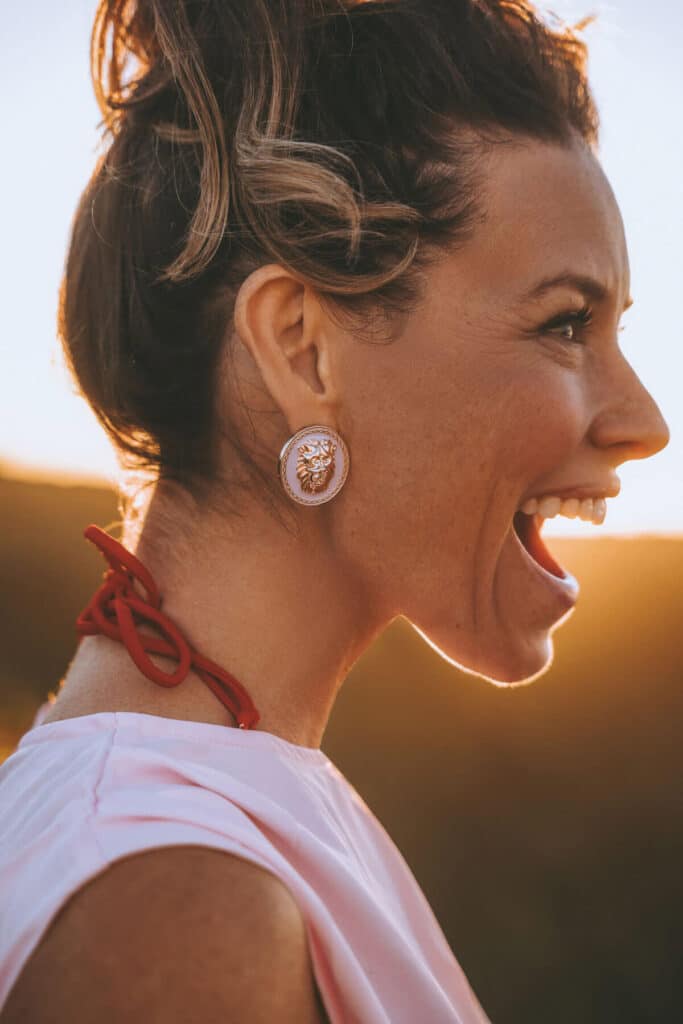
Evangeline described decades of this. Editorial shoots where they pushed her into characters they wanted. Ad campaigns molding her into whatever the creative direction demanded.
Sometimes overly sexual. Sometimes completely disconnected from who she was.
Rarely actually her.
When you spend twenty years being turned into what others need, you lose connection to what you actually are.
The Resistance: Performance Muscle Memory
We connected on Instagram. Started talking about creating together.
The conversation evolved into an actual shoot. But this would be different.
No shot list. No creative direction imposed from outside. No agenda except one: capture who she actually is.
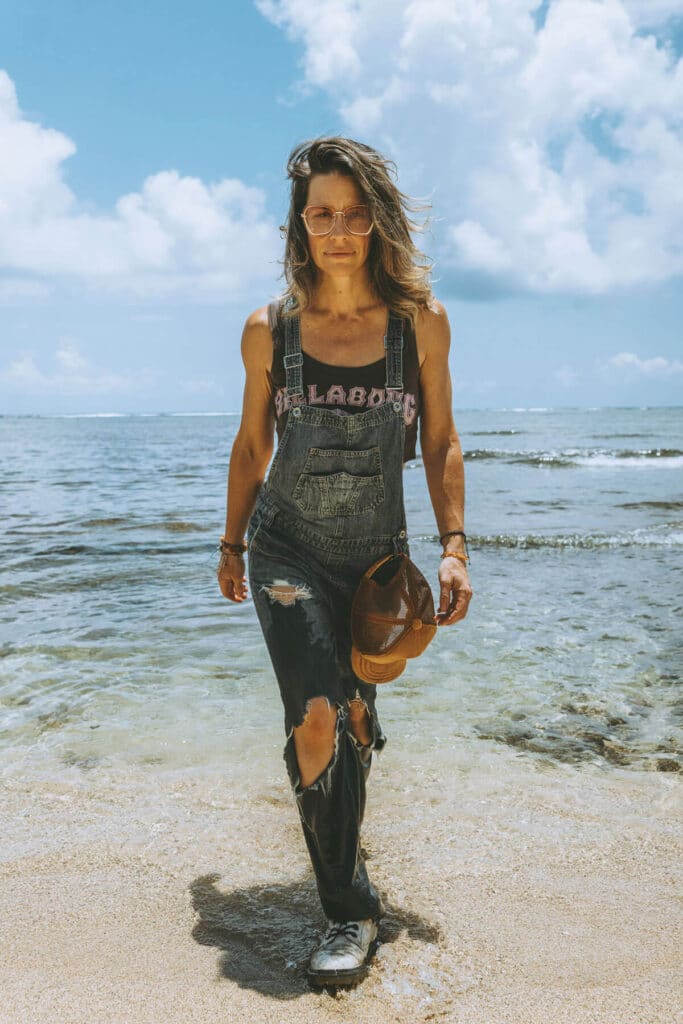
We spent time doing normal things. Her favorite bookstore. Trails she hikes. Her home.
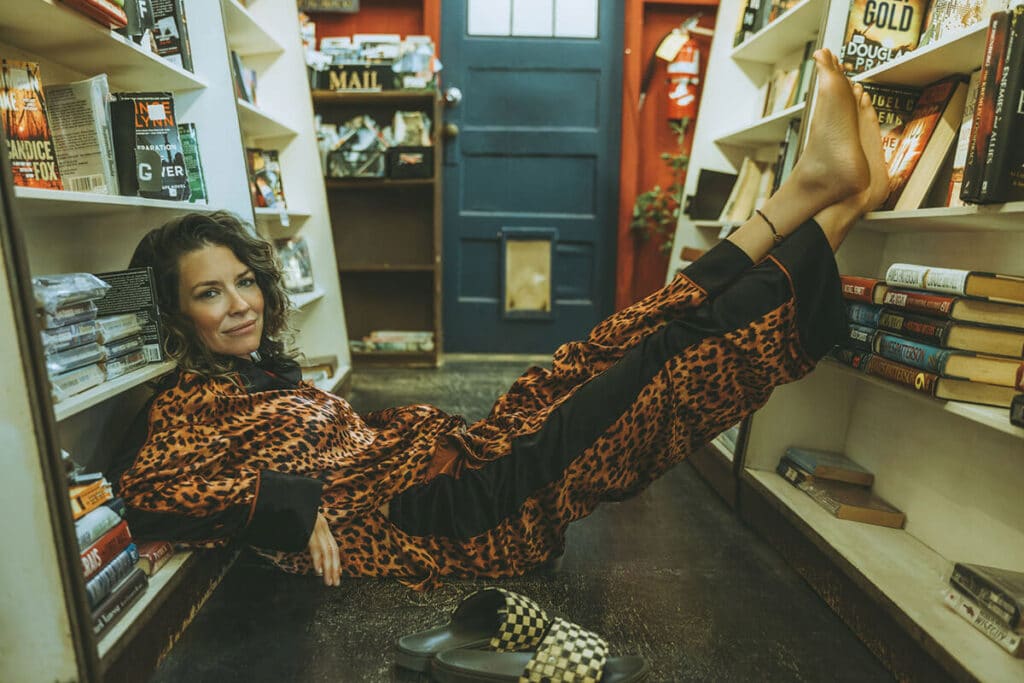
Normal life. Elevated.
But even with that intention, the performance muscle memory kicked in.
There were moments during the shoot where I watched her slip into it. The editorial face. The pose she’d done a thousand times. The character instead of the person.
The Breakthrough: Self-Awareness
Here’s what made this different.
She noticed.
Most people perform without knowing they’re performing. The camera triggers something unconscious. They become who they think they should be.
Evangeline had enough self-awareness to catch herself. To notice when she was performing. To consciously drop back into just being.

“I’m doing it again, aren’t I?”
“Yeah. Just breathe. Come back.”
That ability to course-correct is rare. Most people need the photographer to tell them. She could feel it herself.
That’s the difference between someone who’s done deep identity work and someone who’s just starting.
The Approach: Collaborative Creation
This didn’t feel like a typical client shoot.
We were both creatives. Both exploring. Both building something together.
“Let’s go here.” “What about this light?” “I love this spot.”

No hierarchy. No one directing the other. Just flow.
That collaborative energy changes everything. When you’re co-creating instead of executing someone else’s vision, authenticity emerges naturally.
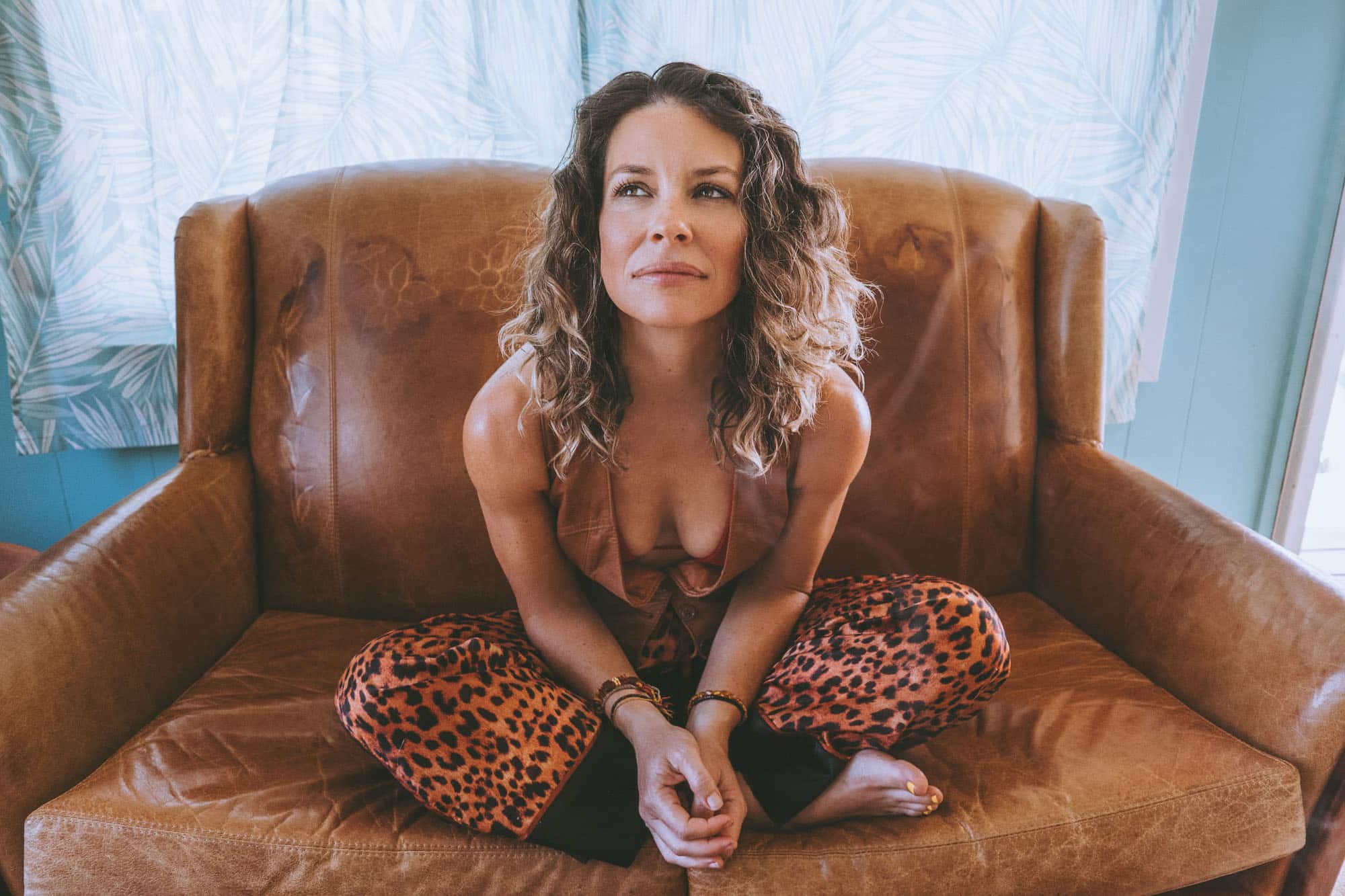
The images weren’t about making her look a certain way. They were about revealing who she already was.
The Healing: Being Seen, Not Performed
Afterward, she described the experience as healing.
Not just helpful. Healing.
Because for the first time in decades, someone photographed her without trying to turn her into something.

No magazine agenda. No brand message. No character to perform.
Just space to be herself. And permission to let that be enough.
Most people don’t realize how rare that is. Especially in celebrity photography. The camera always wants something from you.
This time, the camera just wanted to see her.
The Identity Shift: From Performance to Presence
The images captured something she hadn’t seen in herself before.
Not a better version. Not a polished version. Her actual version.
The person who hikes. Who reads. Who teaches spiritual principles. Who lives quietly away from Hollywood.
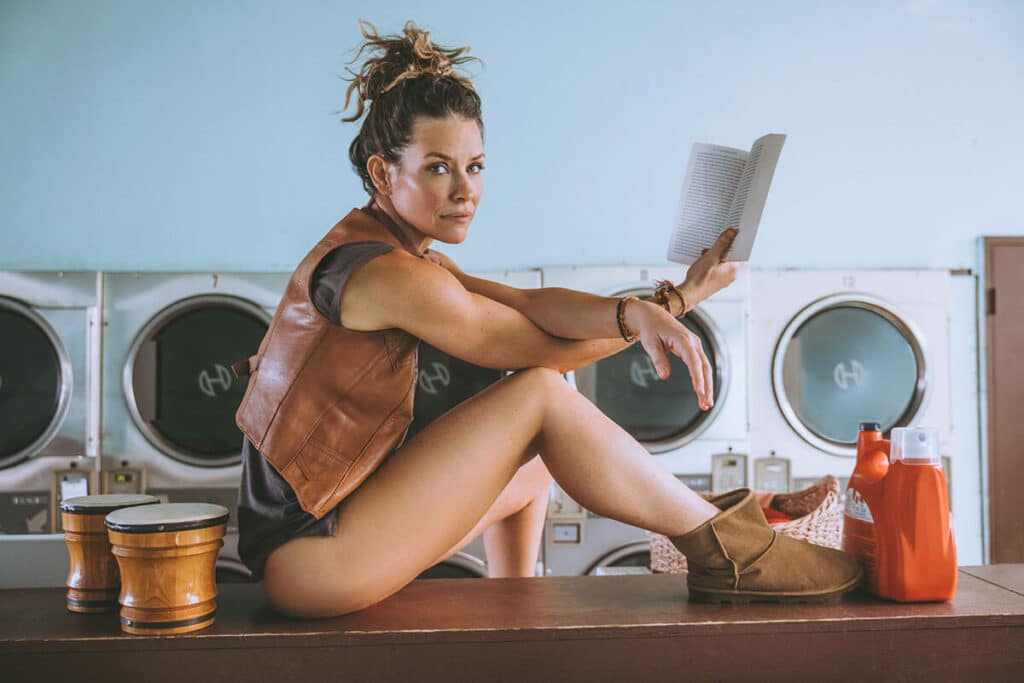
That visual proof became anchor. When she forgets who she is now—when the old identity tries to reassert itself—she looks at the images.
They remind her: this is real. This version of you exists. You’re not making it up.
That’s what identity-based photography does. It makes the internal shift visible externally.
The Three Selves Alignment
Before the shoot, Evangeline had misalignment.
Private self: spiritual teacher, retreat leader, writer, person exploring consciousness.
Public self: still showing up with actress energy in some contexts.
Projected self: every image online showed actress Evangeline Lilly.
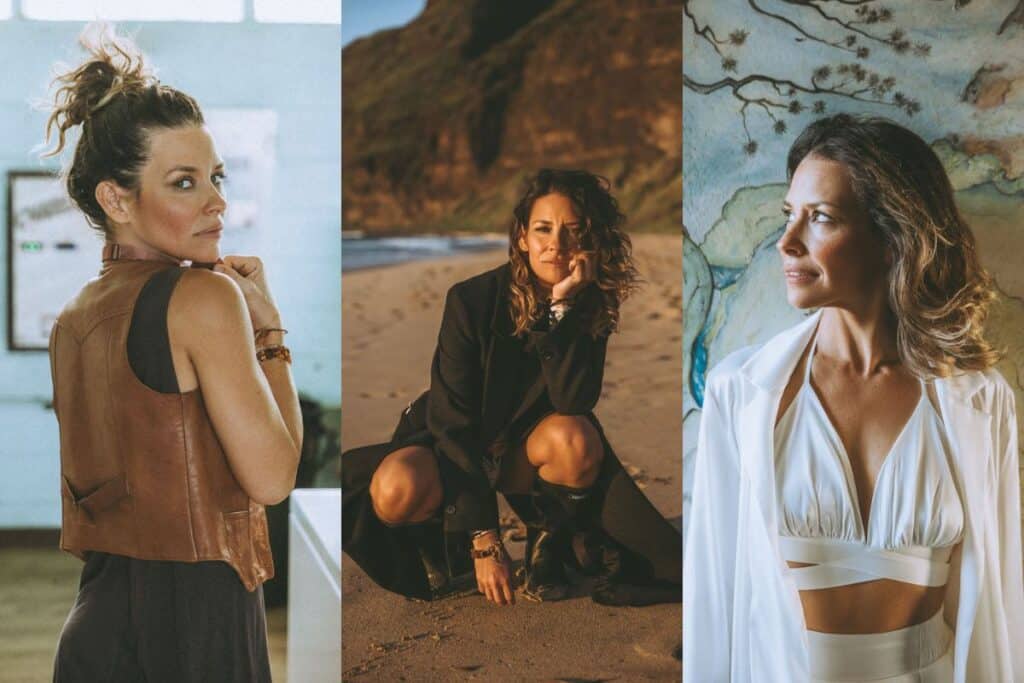
That misalignment creates friction. You know who you’re becoming privately. But publicly and visually, you’re still the old version.
The shoot created alignment. Now all three selves match.
Private, public, and projected all saying the same thing: this is who I am now.
The Images in Action: Building New Identity
She’s using the images everywhere.
Instagram. Substack posts. Promotion for her retreats and coaching work.
But it’s not just about having professional photos. It’s about having visual identity that matches internal identity.

When someone lands on her page now, they don’t see actress. They see teacher. Guide. Someone who’s lived transformation and helps others through it.
The images do that work. Without words. Without explanation.
That’s Visual Frequency of Authority. Your energetic signature made visible.
What Makes This Different From Editorial
Editorial photography serves the publication.
Brand photography serves the brand.
Identity photography serves the person.

Editorial wanted Evangeline to be a character. Sexy. Mysterious. Whatever sold magazines.
Her old brand work wanted her to be a celebrity. Aspirational. Untouchable.
This work wanted her to be herself. Real. Present. Human.
That shift in intention changes everything the camera captures.
The Celebrity Paradox
Here’s the paradox of celebrity photography.
The more famous you are, the less people see you. They see the character. The role. The image the media created.
Evangeline was incredibly famous. And incredibly unseen.
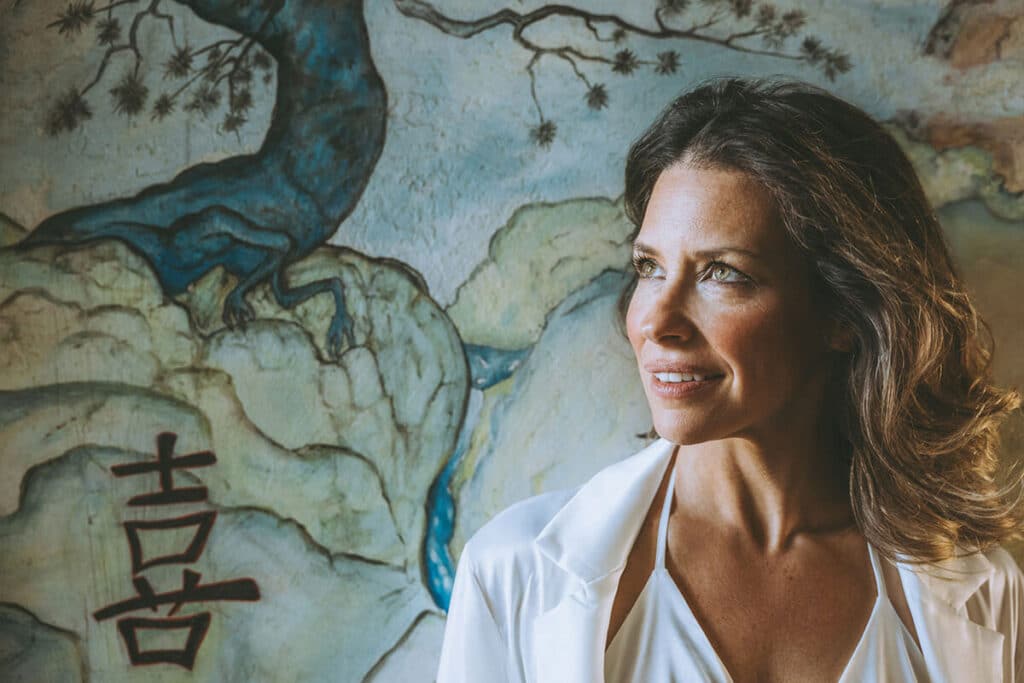
The shoot was about being seen. Not as actress Evangeline Lilly. As Evangeline. The person behind the fame.
Most people think celebrities have it easier with photography. They’re used to cameras. They know how to work them.
But that’s the problem. They know how to perform for cameras. Not how to be themselves in front of them.
The Permission She Needed
The biggest shift wasn’t technical.
It was permission.
Permission to stop being what the industry needed. Permission to claim a completely different identity. Permission to be boring by Hollywood standards.
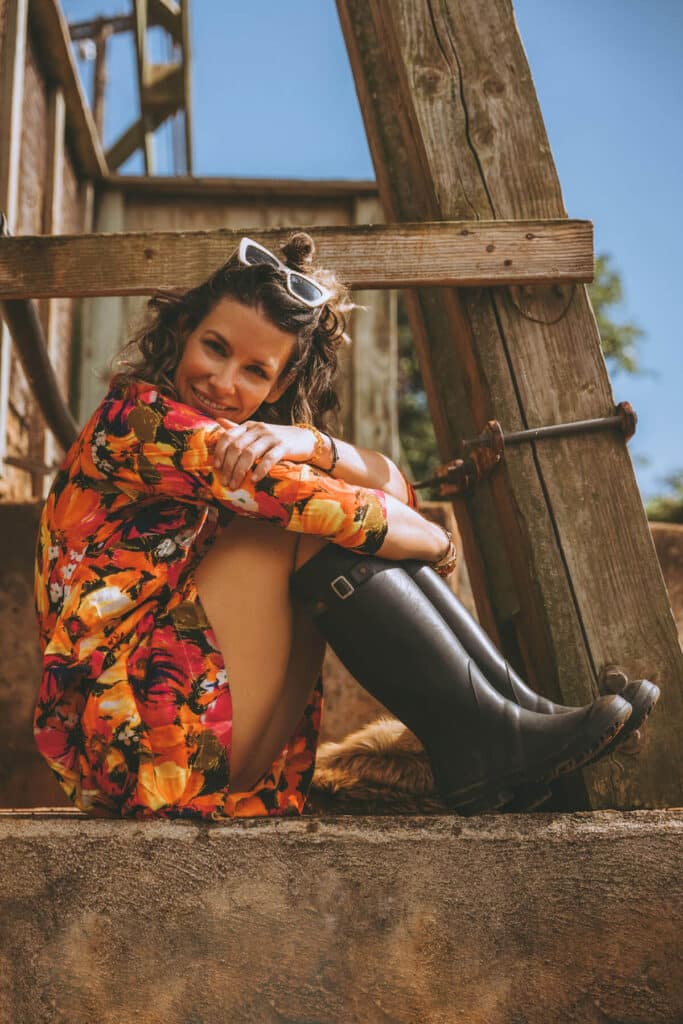
Because teaching spiritual principles in nature isn’t as sexy as red carpets. Leading retreats isn’t as exciting as movie premieres.
The world wanted actress Evangeline Lilly. She needed to give herself permission to be someone else entirely.
The images became proof that the new identity was valid. Worth claiming. Real.
The Difference Collaborative Energy Makes
Most photoshoots have hierarchy.
Photographer directs. Subject follows. One person has the vision. The other executes it.
This was different. We were building together.
She’d suggest a location. I’d respond to the light. We’d both notice a moment. Both feel when something shifted.
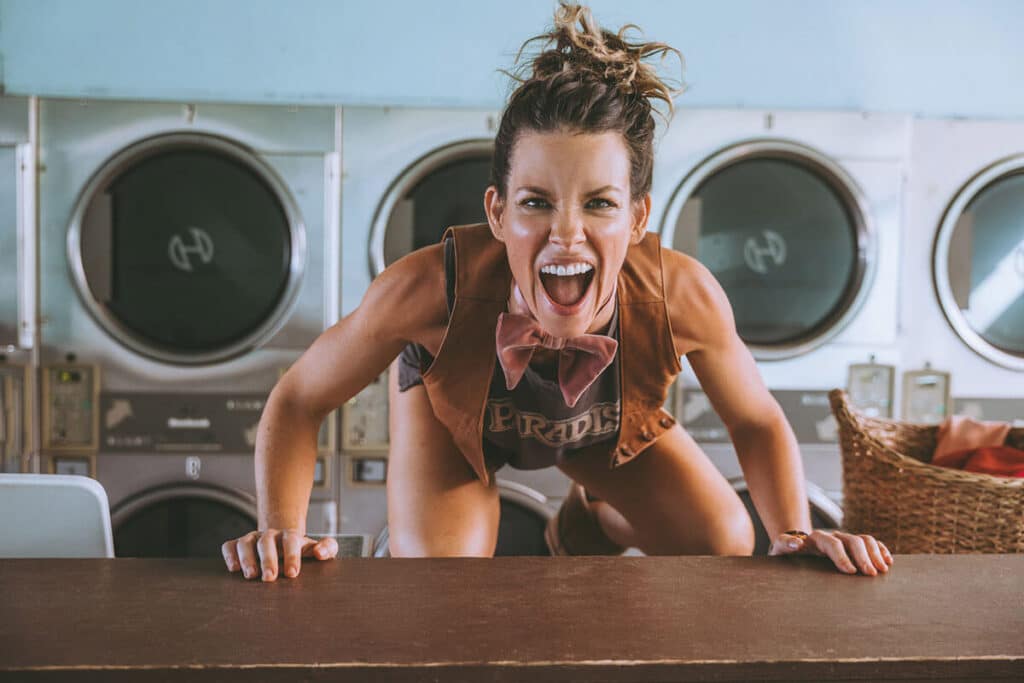
That collaborative energy can’t be faked. It shows in the images.
You can see the difference between photos where someone was directed and photos where someone was co-creating.
One feels controlled. The other feels alive.
What She Said About Past Shoots
“They were always trying to turn me into something I wasn’t.”
That one sentence captures the wound most people carry from bad photography experiences.
Someone tried to make you something you’re not. Sexier. More corporate. More polished. More whatever they thought you should be.

And you left feeling like maybe you’re not enough as you are.
Evangeline carried that wound from decades of editorial work. This shoot healed it.
Not by making her more. By finally seeing her as she actually was.
The Normal Life, Elevated
We didn’t create fantasy.
We elevated reality.
Her actual bookstore. Her actual trails. Her actual home. Her actual life.

That’s what Elevated Realism means. You don’t fabricate somet
hing that doesn’t exist. You reveal what’s already there with intention and aesthetic intelligence.
Most people think they need to create something extraordinary for photos to work. They need exotic locations. Dramatic lighting. High production value.
Wrong.
You need your actual life. Captured with presence.
The After-Shoot Clarity
The images gave her clarity.
This is who I am now. This is what I look like when I’m not performing. This is the energy I want to carry forward.
That clarity matters more than the images themselves.

Because once you see yourself clearly, you can’t unsee it. You know what’s true and what’s performance.
That knowing changes how you show up. How you speak. How you build.
Everything gets easier when your projected self matches your actual self.
The Muscle Memory of Performance
Even with all her awareness, the performance muscle memory was strong.
Twenty years of editorial work leaves marks. Certain poses become automatic. Certain expressions feel safe.
The work was noticing when that kicked in. And choosing presence instead.

That’s advanced work. Most people don’t have that level of self-awareness yet.
But everyone can develop it. The camera becomes the mirror. The photographer becomes the witness. The shoot becomes practice.
Practice choosing presence over performance.
What This Teaches About Identity Transitions
Evangeline’s story isn’t just about celebrity.
It’s about anyone moving from one identity to another.
Corporate executive to entrepreneur. Employee to business owner. One career to something completely different.
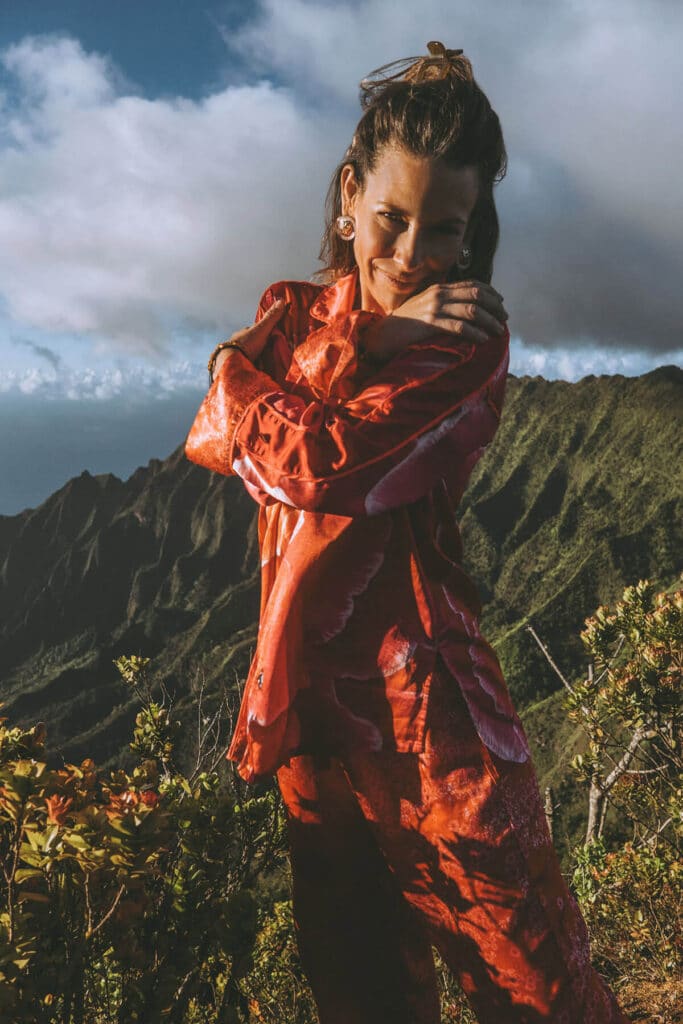
When you’re in transition, your visual identity usually lags behind your internal shift.
You know you’re different. But the world still sees the old you. Because visually, you’re still projecting the old identity.
Closing that gap requires new images. Images that reflect who you’re becoming, not who you were.
The Healing Element
She used the word healing multiple times.
Not transformative. Not helpful. Healing.
Because being seen without agenda heals something deep. Especially after years of being turned into what others needed.
The wound is: I’m only valuable when I’m something I’m not.
The healing is: I’m enough exactly as I am.
The images become evidence. Proof that you’re enough. Worth seeing. Worth capturing.
What Made the Images Work
The images work because they’re true.
Not true like documentary. True like essence.
They capture who Evangeline actually is when she’s not performing. When she’s just being.
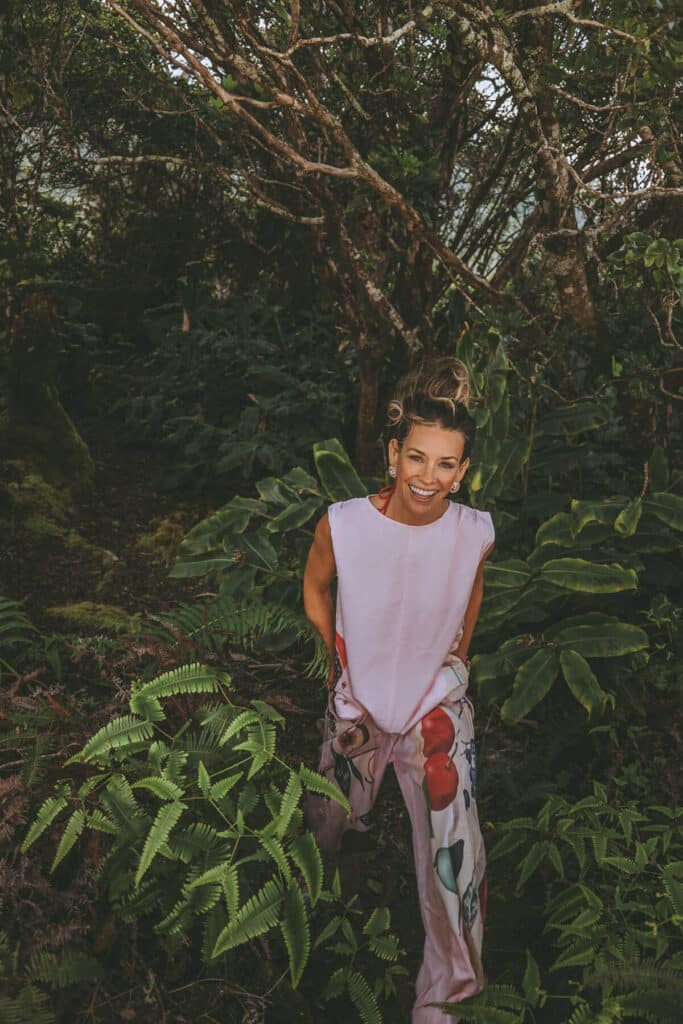
That truth is what people respond to. Not perfection. Not polish. Truth.
Your audience can feel the difference between someone performing authority and someone embodying it.
The images show embodiment. Not performance.
The Platform She’s Building
Now she’s building something completely new.
Not actress platform. Teacher platform.
The images support that. Every photo reinforces: this is who I am now.
Without them, there’d be cognitive dissonance. You’d read about spiritual coaching but see actress photos. The message and the visual wouldn’t match.
That misalignment undermines trust. People sense the gap even if they can’t name it.
Alignment creates trust. When what you say and what you show match, people believe you.
The Investment in New Identity
Most people underinvest in visual identity during transitions.
They think: I’ll update my photos once I’m more established in the new thing.
Wrong.
You need the photos to become established. The images help you claim the new identity. Publicly. Undeniably.
Evangeline understood this. The shoot wasn’t vanity. It was infrastructure for her new identity.
Visual proof that the transition was real.
3 Takeaways
- Years of being turned into what others need creates deep disconnection from self. Editorial photography, brand campaigns, even corporate environments mold you into characters that serve external agendas. Healing happens when someone finally sees and captures you without trying to make you something else. The images become proof that your actual self is enough—no performance required.
- Performance muscle memory is powerful, especially after decades of conditioning. Even with clear intention to be authentic, old patterns resurface automatically. The advanced work is developing self-awareness to notice when you’re performing and consciously choosing presence instead. This requires practice, witness, and permission to drop the masks you’ve worn for safety.
- During identity transitions, visual identity must align with internal shift or the gap undermines credibility. You can’t build a new platform on old images—the cognitive dissonance breaks trust. New identity requires new visual proof. Images that reflect who you’re becoming, not who you were. This isn’t vanity; it’s infrastructure for claiming the next version of yourself publicly and undeniably.


LET'S CONSPIRE & CREATE
CULTIVATING YOUR VISUAL UNIQUENESS AND STREAMLINING YOUR BRAND'S EVOLUTION

Most celebrities spend their careers being turned into something they’re not.
Magazines need a character. Brands need a fantasy. Directors need a performance.
After decades of that, you forget who you actually are.
Evangeline Lilly retired from acting and faced a question most people avoid: who am I when I’m not performing?
The answer required more than introspection. It required proof.
Visual proof that the person she was becoming was real.
The Setup: Post-Fame Identity Crisis
When Evangeline reached out, she wasn’t looking for traditional brand photography.
She was transitioning. From actress to spiritual coach. From Hollywood to retreats and personal development. From performance to presence.
But her visual identity was still stuck in the old world.
Every image online showed actress Evangeline Lilly. Red carpets. Editorial shoots. Characters she’d played.
None of it reflected who she was becoming.
That gap creates paralysis. You can’t show up as your new self when your projected identity is still your old self.
The Problem: Years of Being Molded
Here’s what most people don’t understand about celebrity photography.
It’s not about the person. It’s about the agenda.
The magazine has a story angle. The brand has a campaign message. The photographer has a creative vision.
Evangeline described decades of this. Editorial shoots where they pushed her into characters they wanted. Ad campaigns molding her into whatever the creative direction demanded.
Sometimes overly sexual. Sometimes completely disconnected from who she was.
Rarely actually her.
When you spend twenty years being turned into what others need, you lose connection to what you actually are.
The Resistance: Performance Muscle Memory
We connected on Instagram. Started talking about creating together.
The conversation evolved into an actual shoot. But this would be different.
No shot list. No creative direction imposed from outside. No agenda except one: capture who she actually is.
We spent time doing normal things. Her favorite bookstore. Trails she hikes. Her home.
Normal life. Elevated.
But even with that intention, the performance muscle memory kicked in.
There were moments during the shoot where I watched her slip into it. The editorial face. The pose she’d done a thousand times. The character instead of the person.
The Breakthrough: Self-Awareness
Here’s what made this different.
She noticed.
Most people perform without knowing they’re performing. The camera triggers something unconscious. They become who they think they should be.
Evangeline had enough self-awareness to catch herself. To notice when she was performing. To consciously drop back into just being.
“I’m doing it again, aren’t I?”
“Yeah. Just breathe. Come back.”
That ability to course-correct is rare. Most people need the photographer to tell them. She could feel it herself.
That’s the difference between someone who’s done deep identity work and someone who’s just starting.
The Approach: Collaborative Creation
This didn’t feel like a typical client shoot.
We were both creatives. Both exploring. Both building something together.
“Let’s go here.” “What about this light?” “I love this spot.”
No hierarchy. No one directing the other. Just flow.
That collaborative energy changes everything. When you’re co-creating instead of executing someone else’s vision, authenticity emerges naturally.
The images weren’t about making her look a certain way. They were about revealing who she already was.
The Healing: Being Seen, Not Performed
Afterward, she described the experience as healing.
Not just helpful. Healing.
Because for the first time in decades, someone photographed her without trying to turn her into something.
No magazine agenda. No brand message. No character to perform.
Just space to be herself. And permission to let that be enough.
Most people don’t realize how rare that is. Especially in celebrity photography. The camera always wants something from you.
This time, the camera just wanted to see her.
The Identity Shift: From Performance to Presence
The images captured something she hadn’t seen in herself before.
Not a better version. Not a polished version. Her actual version.
The person who hikes. Who reads. Who teaches spiritual principles. Who lives quietly away from Hollywood.
That visual proof became anchor. When she forgets who she is now—when the old identity tries to reassert itself—she looks at the images.
They remind her: this is real. This version of you exists. You’re not making it up.
That’s what identity-based photography does. It makes the internal shift visible externally.
The Three Selves Alignment
Before the shoot, Evangeline had misalignment.
Private self: spiritual teacher, retreat leader, writer, person exploring consciousness.
Public self: still showing up with actress energy in some contexts.
Projected self: every image online showed actress Evangeline Lilly.
That misalignment creates friction. You know who you’re becoming privately. But publicly and visually, you’re still the old version.
The shoot created alignment. Now all three selves match.
Private, public, and projected all saying the same thing: this is who I am now.
The Images in Action: Building New Identity
She’s using the images everywhere.
Instagram. Substack posts. Promotion for her retreats and coaching work.
But it’s not just about having professional photos. It’s about having visual identity that matches internal identity.
When someone lands on her page now, they don’t see actress. They see teacher. Guide. Someone who’s lived transformation and helps others through it.
The images do that work. Without words. Without explanation.
That’s Visual Frequency of Authority. Your energetic signature made visible.
What Makes This Different From Editorial
Editorial photography serves the publication.
Brand photography serves the brand.
Identity photography serves the person.
Editorial wanted Evangeline to be a character. Sexy. Mysterious. Whatever sold magazines.
Her old brand work wanted her to be a celebrity. Aspirational. Untouchable.
This work wanted her to be herself. Real. Present. Human.
That shift in intention changes everything the camera captures.
The Celebrity Paradox
Here’s the paradox of celebrity photography.
The more famous you are, the less people see you. They see the character. The role. The image the media created.
Evangeline was incredibly famous. And incredibly unseen.
The shoot was about being seen. Not as actress Evangeline Lilly. As Evangeline. The person behind the fame.
Most people think celebrities have it easier with photography. They’re used to cameras. They know how to work them.
But that’s the problem. They know how to perform for cameras. Not how to be themselves in front of them.
The Permission She Needed
The biggest shift wasn’t technical.
It was permission.
Permission to stop being what the industry needed. Permission to claim a completely different identity. Permission to be boring by Hollywood standards.
Because teaching spiritual principles in nature isn’t as sexy as red carpets. Leading retreats isn’t as exciting as movie premieres.
The world wanted actress Evangeline Lilly. She needed to give herself permission to be someone else entirely.
The images became proof that the new identity was valid. Worth claiming. Real.
The Difference Collaborative Energy Makes
Most photoshoots have hierarchy.
Photographer directs. Subject follows. One person has the vision. The other executes it.
This was different. We were building together.
She’d suggest a location. I’d respond to the light. We’d both notice a moment. Both feel when something shifted.
That collaborative energy can’t be faked. It shows in the images.
You can see the difference between photos where someone was directed and photos where someone was co-creating.
One feels controlled. The other feels alive.
What She Said About Past Shoots
“They were always trying to turn me into something I wasn’t.”
That one sentence captures the wound most people carry from bad photography experiences.
Someone tried to make you something you’re not. Sexier. More corporate. More polished. More whatever they thought you should be.
And you left feeling like maybe you’re not enough as you are.
Evangeline carried that wound from decades of editorial work. This shoot healed it.
Not by making her more. By finally seeing her as she actually was.
The Normal Life, Elevated
We didn’t create fantasy.
We elevated reality.
Her actual bookstore. Her actual trails. Her actual home. Her actual life.
That’s what Elevated Realism means. You don’t fabricate somet
hing that doesn’t exist. You reveal what’s already there with intention and aesthetic intelligence.
Most people think they need to create something extraordinary for photos to work. They need exotic locations. Dramatic lighting. High production value.
Wrong.
You need your actual life. Captured with presence.
The After-Shoot Clarity
The images gave her clarity.
This is who I am now. This is what I look like when I’m not performing. This is the energy I want to carry forward.
That clarity matters more than the images themselves.
Because once you see yourself clearly, you can’t unsee it. You know what’s true and what’s performance.
That knowing changes how you show up. How you speak. How you build.
Everything gets easier when your projected self matches your actual self.
The Muscle Memory of Performance
Even with all her awareness, the performance muscle memory was strong.
Twenty years of editorial work leaves marks. Certain poses become automatic. Certain expressions feel safe.
The work was noticing when that kicked in. And choosing presence instead.
That’s advanced work. Most people don’t have that level of self-awareness yet.
But everyone can develop it. The camera becomes the mirror. The photographer becomes the witness. The shoot becomes practice.
Practice choosing presence over performance.
What This Teaches About Identity Transitions
Evangeline’s story isn’t just about celebrity.
It’s about anyone moving from one identity to another.
Corporate executive to entrepreneur. Employee to business owner. One career to something completely different.
When you’re in transition, your visual identity usually lags behind your internal shift.
You know you’re different. But the world still sees the old you. Because visually, you’re still projecting the old identity.
Closing that gap requires new images. Images that reflect who you’re becoming, not who you were.
The Healing Element
She used the word healing multiple times.
Not transformative. Not helpful. Healing.
Because being seen without agenda heals something deep. Especially after years of being turned into what others needed.
The wound is: I’m only valuable when I’m something I’m not.
The healing is: I’m enough exactly as I am.
The images become evidence. Proof that you’re enough. Worth seeing. Worth capturing.
What Made the Images Work
The images work because they’re true.
Not true like documentary. True like essence.
They capture who Evangeline actually is when she’s not performing. When she’s just being.
That truth is what people respond to. Not perfection. Not polish. Truth.
Your audience can feel the difference between someone performing authority and someone embodying it.
The images show embodiment. Not performance.
The Platform She’s Building
Now she’s building something completely new.
Not actress platform. Teacher platform.
The images support that. Every photo reinforces: this is who I am now.
Without them, there’d be cognitive dissonance. You’d read about spiritual coaching but see actress photos. The message and the visual wouldn’t match.
That misalignment undermines trust. People sense the gap even if they can’t name it.
Alignment creates trust. When what you say and what you show match, people believe you.
The Investment in New Identity
Most people underinvest in visual identity during transitions.
They think: I’ll update my photos once I’m more established in the new thing.
Wrong.
You need the photos to become established. The images help you claim the new identity. Publicly. Undeniably.
Evangeline understood this. The shoot wasn’t vanity. It was infrastructure for her new identity.
Visual proof that the transition was real.
3 Takeaways
- Years of being turned into what others need creates deep disconnection from self. Editorial photography, brand campaigns, even corporate environments mold you into characters that serve external agendas. Healing happens when someone finally sees and captures you without trying to make you something else. The images become proof that your actual self is enough—no performance required.
- Performance muscle memory is powerful, especially after decades of conditioning. Even with clear intention to be authentic, old patterns resurface automatically. The advanced work is developing self-awareness to notice when you’re performing and consciously choosing presence instead. This requires practice, witness, and permission to drop the masks you’ve worn for safety.
- During identity transitions, visual identity must align with internal shift or the gap undermines credibility. You can’t build a new platform on old images—the cognitive dissonance breaks trust. New identity requires new visual proof. Images that reflect who you’re becoming, not who you were. This isn’t vanity; it’s infrastructure for claiming the next version of yourself publicly and undeniably.
2/15/26
Case Study: Evangeline Lilly – Authenticity Beyond Celebrity
infuse your vision with a fresh breath of creativity and vitality
BOOK A BRAND PHOTOSHOOT


GET THE DETAILS
GET THE DETAILS
infuse your vision with a fresh breath of creativity and vitality

PODCAST
BRAND INTELLIGENCE
CREATIVE INTELLIGENCE
LIFE INTELLIGENCE


masterfully aligning perception and reality through personal branding



masterfully aligning perception and reality through personal branding

Most celebrities spend their careers being turned into something they’re not.
Magazines need a character. Brands need a fantasy. Directors need a performance.
After decades of that, you forget who you actually are.
Evangeline Lilly retired from acting and faced a question most people avoid: who am I when I’m not performing?
The answer required more than introspection. It required proof.
Visual proof that the person she was becoming was real.
The Setup: Post-Fame Identity Crisis
When Evangeline reached out, she wasn’t looking for traditional brand photography.
She was transitioning. From actress to spiritual coach. From Hollywood to retreats and personal development. From performance to presence.
But her visual identity was still stuck in the old world.
Every image online showed actress Evangeline Lilly. Red carpets. Editorial shoots. Characters she’d played.
None of it reflected who she was becoming.
That gap creates paralysis. You can’t show up as your new self when your projected identity is still your old self.
The Problem: Years of Being Molded
Here’s what most people don’t understand about celebrity photography.
It’s not about the person. It’s about the agenda.
The magazine has a story angle. The brand has a campaign message. The photographer has a creative vision.
Evangeline described decades of this. Editorial shoots where they pushed her into characters they wanted. Ad campaigns molding her into whatever the creative direction demanded.
Sometimes overly sexual. Sometimes completely disconnected from who she was.
Rarely actually her.
When you spend twenty years being turned into what others need, you lose connection to what you actually are.
The Resistance: Performance Muscle Memory
We connected on Instagram. Started talking about creating together.
The conversation evolved into an actual shoot. But this would be different.
No shot list. No creative direction imposed from outside. No agenda except one: capture who she actually is.
We spent time doing normal things. Her favorite bookstore. Trails she hikes. Her home.
Normal life. Elevated.
But even with that intention, the performance muscle memory kicked in.
There were moments during the shoot where I watched her slip into it. The editorial face. The pose she’d done a thousand times. The character instead of the person.
The Breakthrough: Self-Awareness
Here’s what made this different.
She noticed.
Most people perform without knowing they’re performing. The camera triggers something unconscious. They become who they think they should be.
Evangeline had enough self-awareness to catch herself. To notice when she was performing. To consciously drop back into just being.
“I’m doing it again, aren’t I?”
“Yeah. Just breathe. Come back.”
That ability to course-correct is rare. Most people need the photographer to tell them. She could feel it herself.
That’s the difference between someone who’s done deep identity work and someone who’s just starting.
The Approach: Collaborative Creation
This didn’t feel like a typical client shoot.
We were both creatives. Both exploring. Both building something together.
“Let’s go here.” “What about this light?” “I love this spot.”
No hierarchy. No one directing the other. Just flow.
That collaborative energy changes everything. When you’re co-creating instead of executing someone else’s vision, authenticity emerges naturally.
The images weren’t about making her look a certain way. They were about revealing who she already was.
The Healing: Being Seen, Not Performed
Afterward, she described the experience as healing.
Not just helpful. Healing.
Because for the first time in decades, someone photographed her without trying to turn her into something.
No magazine agenda. No brand message. No character to perform.
Just space to be herself. And permission to let that be enough.
Most people don’t realize how rare that is. Especially in celebrity photography. The camera always wants something from you.
This time, the camera just wanted to see her.
The Identity Shift: From Performance to Presence
The images captured something she hadn’t seen in herself before.
Not a better version. Not a polished version. Her actual version.
The person who hikes. Who reads. Who teaches spiritual principles. Who lives quietly away from Hollywood.
That visual proof became anchor. When she forgets who she is now—when the old identity tries to reassert itself—she looks at the images.
They remind her: this is real. This version of you exists. You’re not making it up.
That’s what identity-based photography does. It makes the internal shift visible externally.
The Three Selves Alignment
Before the shoot, Evangeline had misalignment.
Private self: spiritual teacher, retreat leader, writer, person exploring consciousness.
Public self: still showing up with actress energy in some contexts.
Projected self: every image online showed actress Evangeline Lilly.
That misalignment creates friction. You know who you’re becoming privately. But publicly and visually, you’re still the old version.
The shoot created alignment. Now all three selves match.
Private, public, and projected all saying the same thing: this is who I am now.
The Images in Action: Building New Identity
She’s using the images everywhere.
Instagram. Substack posts. Promotion for her retreats and coaching work.
But it’s not just about having professional photos. It’s about having visual identity that matches internal identity.
When someone lands on her page now, they don’t see actress. They see teacher. Guide. Someone who’s lived transformation and helps others through it.
The images do that work. Without words. Without explanation.
That’s Visual Frequency of Authority. Your energetic signature made visible.
What Makes This Different From Editorial
Editorial photography serves the publication.
Brand photography serves the brand.
Identity photography serves the person.
Editorial wanted Evangeline to be a character. Sexy. Mysterious. Whatever sold magazines.
Her old brand work wanted her to be a celebrity. Aspirational. Untouchable.
This work wanted her to be herself. Real. Present. Human.
That shift in intention changes everything the camera captures.
The Celebrity Paradox
Here’s the paradox of celebrity photography.
The more famous you are, the less people see you. They see the character. The role. The image the media created.
Evangeline was incredibly famous. And incredibly unseen.
The shoot was about being seen. Not as actress Evangeline Lilly. As Evangeline. The person behind the fame.
Most people think celebrities have it easier with photography. They’re used to cameras. They know how to work them.
But that’s the problem. They know how to perform for cameras. Not how to be themselves in front of them.
The Permission She Needed
The biggest shift wasn’t technical.
It was permission.
Permission to stop being what the industry needed. Permission to claim a completely different identity. Permission to be boring by Hollywood standards.
Because teaching spiritual principles in nature isn’t as sexy as red carpets. Leading retreats isn’t as exciting as movie premieres.
The world wanted actress Evangeline Lilly. She needed to give herself permission to be someone else entirely.
The images became proof that the new identity was valid. Worth claiming. Real.
The Difference Collaborative Energy Makes
Most photoshoots have hierarchy.
Photographer directs. Subject follows. One person has the vision. The other executes it.
This was different. We were building together.
She’d suggest a location. I’d respond to the light. We’d both notice a moment. Both feel when something shifted.
That collaborative energy can’t be faked. It shows in the images.
You can see the difference between photos where someone was directed and photos where someone was co-creating.
One feels controlled. The other feels alive.
What She Said About Past Shoots
“They were always trying to turn me into something I wasn’t.”
That one sentence captures the wound most people carry from bad photography experiences.
Someone tried to make you something you’re not. Sexier. More corporate. More polished. More whatever they thought you should be.
And you left feeling like maybe you’re not enough as you are.
Evangeline carried that wound from decades of editorial work. This shoot healed it.
Not by making her more. By finally seeing her as she actually was.
The Normal Life, Elevated
We didn’t create fantasy.
We elevated reality.
Her actual bookstore. Her actual trails. Her actual home. Her actual life.
That’s what Elevated Realism means. You don’t fabricate somet
hing that doesn’t exist. You reveal what’s already there with intention and aesthetic intelligence.
Most people think they need to create something extraordinary for photos to work. They need exotic locations. Dramatic lighting. High production value.
Wrong.
You need your actual life. Captured with presence.
The After-Shoot Clarity
The images gave her clarity.
This is who I am now. This is what I look like when I’m not performing. This is the energy I want to carry forward.
That clarity matters more than the images themselves.
Because once you see yourself clearly, you can’t unsee it. You know what’s true and what’s performance.
That knowing changes how you show up. How you speak. How you build.
Everything gets easier when your projected self matches your actual self.
The Muscle Memory of Performance
Even with all her awareness, the performance muscle memory was strong.
Twenty years of editorial work leaves marks. Certain poses become automatic. Certain expressions feel safe.
The work was noticing when that kicked in. And choosing presence instead.
That’s advanced work. Most people don’t have that level of self-awareness yet.
But everyone can develop it. The camera becomes the mirror. The photographer becomes the witness. The shoot becomes practice.
Practice choosing presence over performance.
What This Teaches About Identity Transitions
Evangeline’s story isn’t just about celebrity.
It’s about anyone moving from one identity to another.
Corporate executive to entrepreneur. Employee to business owner. One career to something completely different.
When you’re in transition, your visual identity usually lags behind your internal shift.
You know you’re different. But the world still sees the old you. Because visually, you’re still projecting the old identity.
Closing that gap requires new images. Images that reflect who you’re becoming, not who you were.
The Healing Element
She used the word healing multiple times.
Not transformative. Not helpful. Healing.
Because being seen without agenda heals something deep. Especially after years of being turned into what others needed.
The wound is: I’m only valuable when I’m something I’m not.
The healing is: I’m enough exactly as I am.
The images become evidence. Proof that you’re enough. Worth seeing. Worth capturing.
What Made the Images Work
The images work because they’re true.
Not true like documentary. True like essence.
They capture who Evangeline actually is when she’s not performing. When she’s just being.
That truth is what people respond to. Not perfection. Not polish. Truth.
Your audience can feel the difference between someone performing authority and someone embodying it.
The images show embodiment. Not performance.
The Platform She’s Building
Now she’s building something completely new.
Not actress platform. Teacher platform.
The images support that. Every photo reinforces: this is who I am now.
Without them, there’d be cognitive dissonance. You’d read about spiritual coaching but see actress photos. The message and the visual wouldn’t match.
That misalignment undermines trust. People sense the gap even if they can’t name it.
Alignment creates trust. When what you say and what you show match, people believe you.
The Investment in New Identity
Most people underinvest in visual identity during transitions.
They think: I’ll update my photos once I’m more established in the new thing.
Wrong.
You need the photos to become established. The images help you claim the new identity. Publicly. Undeniably.
Evangeline understood this. The shoot wasn’t vanity. It was infrastructure for her new identity.
Visual proof that the transition was real.
3 Takeaways
- Years of being turned into what others need creates deep disconnection from self. Editorial photography, brand campaigns, even corporate environments mold you into characters that serve external agendas. Healing happens when someone finally sees and captures you without trying to make you something else. The images become proof that your actual self is enough—no performance required.
- Performance muscle memory is powerful, especially after decades of conditioning. Even with clear intention to be authentic, old patterns resurface automatically. The advanced work is developing self-awareness to notice when you’re performing and consciously choosing presence instead. This requires practice, witness, and permission to drop the masks you’ve worn for safety.
- During identity transitions, visual identity must align with internal shift or the gap undermines credibility. You can’t build a new platform on old images—the cognitive dissonance breaks trust. New identity requires new visual proof. Images that reflect who you’re becoming, not who you were. This isn’t vanity; it’s infrastructure for claiming the next version of yourself publicly and undeniably.
2/15/26
Case Study: Evangeline Lilly – Authenticity Beyond Celebrity
When you need a trusted creative partner in the room.
Take the Fit Check
Be seen at the level you’re stepping into.

Hey! I'm Nick.
PHOTOGRAPHER
BRAND ALCHEMIST
TEACHER
At vero eos et accusamus et iusto odio dignissimos ducimus qui blanditiis praesentium voluptatum deleniti atque corrupti quos dolores et quas molestias excepturi sint occaecati cupiditate non provident, similique sunt in culpa qui officia deserunt mollitia.
Build authority from the inside out.
Emanate is a creative-direction-led photography experience for entrepreneurs, speakers, and thought leaders in a moment of expansion. This isn’t about better photos. It’s about aligning how you’re seen with who you’ve become. For seasons of rebrand, visibility, and next-level leadership.

Magnetic Authority is a self-guided container for people who feel visible, but not fully anchored.
If your message keeps shifting, your brand feels inconsistent, or your presence doesn’t match your capability yet. This is where you build the foundation before you scale.
Take the Fit Check
Start Here
For founders, creatives, and leaders who want a trusted long-term partner. This isn’t coaching or traditional consulting.
It’s an ongoing creative partnership focused on bringing your personal brand identity to life.
Your brand. Your website. Your visuals.
All shaped as a direct extension of who you are. The work also includes a bespoke process of identifying and aligning the right experts when needed, so nothing gets built out of sync with your core.
Explore the Partnership

Quiet. Precise. Highly Selective.
NEXT post
PREVIOUS post
read the latest
Brand guidelines are static rules for the surface. A Brand Brain is a living codification of identity a team or an AI can generate from. The difference, defined.
We trained six styles of kung fu in one month. Sampling that widely taught me how a creative actually finds the practice worth years: breadth first, the pull as data, then depth.
Travel makes you more creative because unfamiliar places wake up your perception. Why the effect works, and how to bring the sharpened eye home with you.
Your brand photos lag behind you because you kept evolving and the images stayed frozen. Why the gap opens, how to spot it, and what closes it.
The kung fu school had rules: locked-in weekdays, dawn starts, push-ups for lateness. A month inside taught me that constraints you choose are what make depth possible.
A daily creative practice is making one real thing every day, however small, to stay in a proactive state. A working definition, and how to build one that lasts.

AI describes your brand by averaging your public record. How to codify one identity, repeat it everywhere, and get the machines to echo you back accurately.

I’ve photographed Justin Bieber several times and seen fame up close. His stripped-down Coachella set showed the thing I keep relearning about creative work: production amplifies, and only artistry carries.

You recover from creative burnout by treating it as a nervous system state: build real down-cycles, read your own signals, and return to the work you love.

A magnetic personal brand comes from coherence and one clear through-line. Here is how entrepreneurs build one, in order, and the trap that keeps most brands scattered.

I spent a month training kung fu in Wudang at 47, the oldest and slowest learner in the room. What being a beginner again in midlife taught me about pace, comparison, and starting anyway.

You develop taste through thousands of reps of looking closely and deciding what works. A photographer’s honest answer on how taste gets built.

You make a personal brand more coherent by naming the identity underneath it, distilling a one or two word through-line, and bringing the four layers into agreement. The full path, in order.

About the Blogger
I was born in a low middle class conservative religious family in the suburbs of Seattle. Art was and always has been my passion, and more than that a way of life. Starting as a graphic designer, I taught myself photography, built a commercial/editorial business shooting for the worlds biggest brands like Nike, Coca-Cola, Adidas and more. I've also had the opportunity to photograph the world's biggest celebrities like Justin Bieber, Usher, Jessica Alba and more. I've curated a lifestyle around creativity and have learned a lot along the way which I get to share here.
I was born in a low middle class conservative religious family in the suburbs of Seattle. Art was and always has been my passion, and more than that a way of life. Starting as a graphic designer, I taught myself photography, built a commercial/editorial business shooting for the worlds biggest brands like Nike, Coca-Cola, Adidas and more. I've also had the opportunity to photograph the world's biggest celebrities like Justin Bieber, Usher, Jessica Alba and more. I've curated a lifestyle around creativity and have learned a lot along the way which I get to share here.
